

To tell broken lashes from lashes that have fallen out, look at the lengths that remain and how they are spread along the eyelid. Short, uneven lashes may point to breakage, while a thinner patch may suggest lash loss. Finding a lash or fragment while removing makeup does not tell you which has happened. Look closely without pulling, and think about any habits that may be putting your lashes under strain. If the change is sudden, noticeable or accompanied by eye symptoms, seek medical advice.
Breakage or lash loss: clues, not certainty
With breakage, part of the lash fibre snaps. With lash loss, the lash detaches from the eyelid. The difference is not always easy to see, especially when lashes are covered with makeup, stuck together or naturally short.
| What you see | What it may suggest | What it does not prove |
|---|---|---|
| Short fragments on a cotton pad | Possible breakage of the lash fibre | The cause of the breakage or the definite origin of each fragment |
| Lashes that are present but shorter in some areas | Possible fragility or breakage | That every short lash is damaged: some may be growing back |
| A section of the eyelid that looks less full than before | Visible lash loss or a change in distribution | A diagnosis or a specific cause |
| An apparently complete lash found during cleansing | A lash that has detached | Abnormal lash loss on its own |
These signs can occur together. You may see shorter lashes alongside a less dense lash line. There is no need to look for a small bulb at the end of a lash. What you find on a cotton pad is not a reliable at-home test.
How to observe without causing more fragility
Look at the lash line at rest
Stand in front of a mirror with soft, sufficient lighting after gently removing your makeup. Do not pull on the eyelid to see better or separate the lashes with tweezers. Note their apparent length, how evenly they are distributed and whether any areas look less full.
For example, noticeably shorter lashes in the centre that are still visible at the base do not suggest the same thing as a section of the lash line that has become almost bare. Begin by describing what you see instead of trying to identify the cause.
Compare under similar conditions
If you take photos, use the same lighting and angle each time, without mascara. Filters, shadows and different makeup can make the lash line look fuller or sparser than it really is. An older photo taken in similar conditions is more useful than counting the lashes you find.
Keep track of the context too: a new mascara, extension removal, unusual rubbing, discomfort or itching. Long-standing asymmetry does not have the same significance as new thinning on one side. Do not perform a pull test to check whether the lashes are firmly attached.
Strain to avoid
You do not necessarily need to stop wearing makeup. The main thing is to avoid actions that catch or pull on the lash fibres.
- When removing makeup: let a suitable product dissolve it instead of rubbing repeatedly or forcefully. If you have to pull to remove your mascara, reconsider your method.
- When using an eyelash curler: avoid clamping lashes that have already been stiffened by mascara. If the tool catches or pulls, stop using it.
- With extensions or false lashes: do not pull them off. Have extensions removed by a professional rather than pulling on your natural lashes.
- If your eyes itch: do not rub them for relief. Persistent discomfort calls for advice, not more handling.
To understand the needs of the surrounding skin, you can read our guide to specific eye-contour care. A product intended for this area is not automatically suitable for use right along the lash line.
When should you seek advice?
Sudden lash loss, a clearly bare area, a change that is getting worse or a new difference between the eyes warrants a consultation. Mention redness, crusting, persistent itching or swollen eyelids as well.
If you experience eye pain, reduced vision or strong sensitivity to light, seek medical advice promptly. If your eyebrows are also becoming thinner, mention that too. This observation does not identify the cause. Our article on sparse eyebrows and gentle care covers their upkeep but does not replace professional advice.
The role of a strengthening treatment
According to the manufacturer, Booster Serum – Lashes and Eyebrows helps strengthen lashes, limit their fragility and improve the appearance of their density, thickness and length. It is a cosmetic supplement. It cannot determine why your lashes are falling out, and it does not replace changing habits that put them under strain.
To explore how to choose a formula, see our article on prostaglandins in lash serums.
Frequently asked questions
Is a short lash necessarily broken?
No. It may simply be growing back. Length alone is not enough to draw a conclusion. Look at the lash line as a whole and note how it changes over time.
Should lashes on a cotton pad be a cause for concern?
Not on their own. A visibly thinning lash line, an unusual change or associated symptoms are more useful indicators.
Should you brush your lashes to check their strength?
No. Do not try to make them detach. Observation in the mirror is enough. A professional can examine the area if needed.
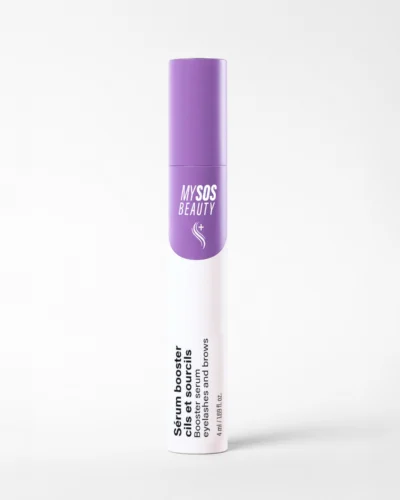
Strengthens lashes and brows
- Strengthens lashes and eyebrows
- Helps improve the appearance of density, thickness and length
- A daily
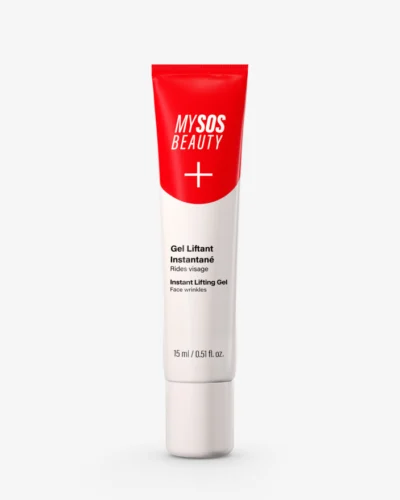 BEST SELLER
Eye contour
- A feeling of tighter skin around the eyes
- A gel that dries in a few minutes
- For light, combination to oily skin


Comments (0)