
Mature skin can feel tight after cleansing, lose some suppleness or look dull from one day to the next. When you choose a hydrating mask, start with how your skin feels. Then look at the formula, texture and recommended wear time.
Start by observing your skin
Your skin may not react the same way every day. It can feel comfortable in the morning and become tight after a cleanser that is too harsh. Cold weather, wind, too little sleep or several active ingredients can also make dryness more noticeable.
Take a few minutes to look at your face after cleansing, before applying moisturiser. If your skin quickly feels tight, choose a formula that feels comfortable rather than one that promises the most dramatic results. If it feels rough or lacks suppleness, look for ingredients that combine humectants and emollients. Our article on the functions of humectants and film-forming ingredients explains the role of these ingredient families.
The term “anti-ageing” is not enough to assess a mask. It does not tell you whether you will enjoy the texture, whether the product contains fragrance or how well your skin will tolerate it. A mask may improve comfort and make the skin look smoother without permanently changing wrinkles or firmness.
Ingredients to look for in the INCI list
Hydrating formulas often contain glycerine, betaine, propylene glycol, pentylene glycol or butylene glycol. These ingredients help, among other things, maintain water at the skin’s surface. Hyaluronic acid also appears in several forms in skincare products intended to improve the feeling of hydration.
Even so, one ingredient cannot tell you everything about a formula. Its position in the INCI list offers a useful indication, but does not always reveal its exact concentration. To learn how to read ingredient names and their order, see our advice on reading an INCI list.
Emollients soften the skin to the touch. Film-forming ingredients can leave a light layer on the surface and add to the feeling of comfort. That enveloping effect may suit skin that feels tight, but it may be less appealing if you dislike feeling a layer on your face.
Fragrance is worth considering too. Its presence is not automatically a problem, but a fragrance-free formula can make it easier to observe your tolerance if your skin reacts easily. Starting several products at the same time also makes it harder to identify which one is causing redness or discomfort. For general information about cosmetic safety, see the ANSES information on cosmetics.
Texture matters as much as the formula
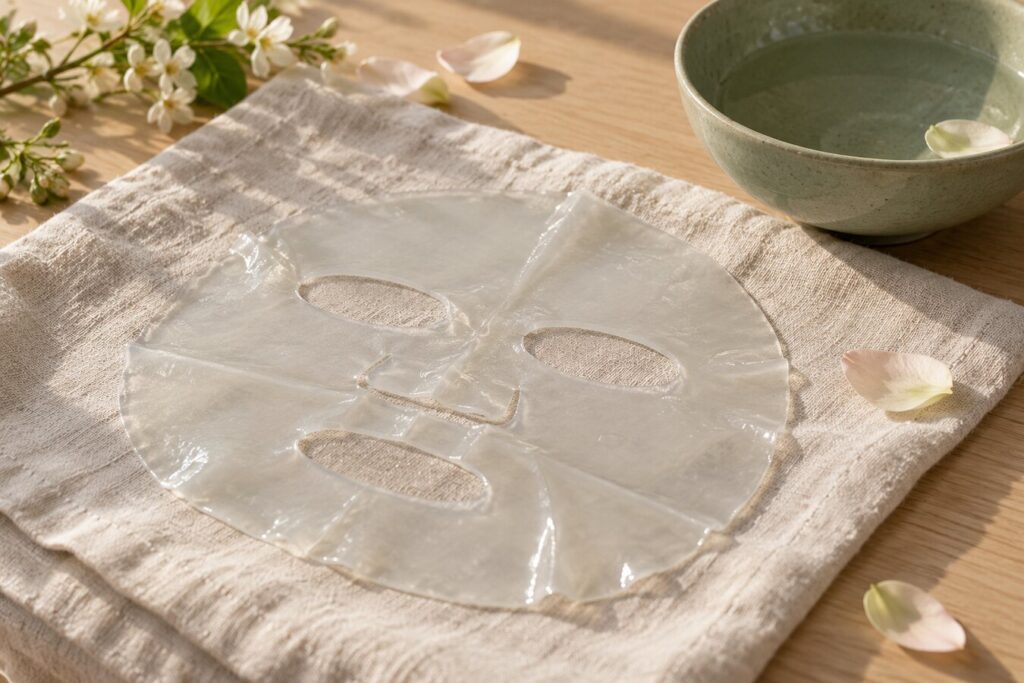
Cream, gel, sheet or hydrogel: the format changes how you use the product. A cream is generally easy to remove and suits a short routine. A sheet mask is quick to apply, but may move if you talk or walk around. A hydrogel adheres more closely to the face and may suit you if you prefer to leave the mask on longer.
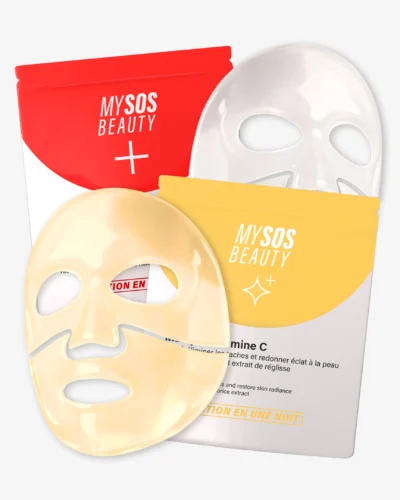
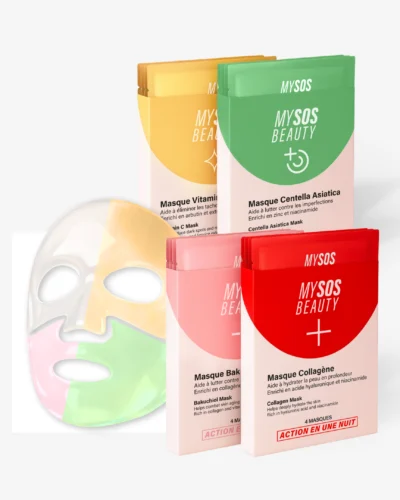
The Pack de 4 Masques Bio-Collagène is described on its official product page as a hydrogel mask containing, among other ingredients, glycerine, betaine, hyaluronic acid, niacinamide and collagen. The brand states that it hydrates the skin, smooths its appearance and may make the skin look more refined, supple and radiant.
These statements describe cosmetic effects related to appearance. They are not medical claims and cannot predict the result for every skin type. The product page also mentions a formula made with 96.9% naturally derived ingredients. It reports an instrumental measurement showing 80% more hydration one hour after application. The test was carried out with a corneometer on 10 volunteers with dry skin, after a single application. This result applies to those specific conditions and does not necessarily reflect your own experience.
Fit the application into your routine
Before applying a mask, cleanse your face with a product you already know, then pat it dry. For the hydrogel mask in the Pack de 4 Masques Bio-Collagène, the product page advises starting with the lower part of the face, then placing the upper part. Adjust the edges without pulling the skin. The two sections may overlap slightly, depending on the shape of your face.
The brand recommends keeping the mask on for at least four hours during the day or wearing it overnight. It gradually becomes transparent; the product page says to remove it once it is completely transparent. It also states that there is no need to rinse or cleanse the face after removal. You can then continue with your usual skincare or apply makeup.
Using a mask once a week can be a practical starting point if it suits your routine. It is not a universal scientific rule. If your skin stings, feels hot, itches or becomes red, remove the mask. Rinse if necessary according to the label instructions, and do not use the product again until you understand how your skin reacts.
To make the result easier to assess, avoid testing the mask on the same evening as an exfoliant or several new serums. Changing your entire routine at once makes it impossible to know which product caused the discomfort.
Assess the result
After removing the mask, ask yourself whether your skin feels more comfortable, whether dry areas feel less tight and whether you like the texture enough to use it again. Those observations are more useful than a broad promise of youthfulness or transformation.
A hydrating treatment can make the skin look smoother immediately after application. The surface may appear more supple because it is better hydrated and covered by the formula’s ingredients. This visual effect does not prove a lasting action on wrinkles, pores or firmness.
If you already use a serum, moisturiser and sunscreen, do not automatically layer every product on the same evening. Depending on its texture and directions for use, the mask may replace one hydrating step or be applied before your usual skincare. In the morning, continue using sunscreen when you go outside.
Three common mistakes
Keeping the mask on despite discomfort
Skin that feels tight does not need the mask to stay on longer. The sensation may come from a product drying, poor positioning or insufficient tolerance. Follow the directions and remove the mask if the discomfort increases.
Adding several new products at once
Introducing a mask, exfoliant and serum on the same day makes it impossible to know what your skin tolerates. Keep the rest of your routine stable during the first uses and add new products one at a time.
Applying it over the eyes or onto the neck
Follow the mask’s cut-outs and avoid direct contact with the eyes. Do not apply the product to the neck or eye contour unless the official product information specifically allows it. These areas may have a different tolerance from the cheeks or forehead.
FAQ about hydrating masks for mature skin
Are hydrating masks only suitable for dry skin?
No. Normal, combination or mature skin may also need extra comfort at certain times. Choose a texture that your skin tolerates well and avoid adding too many layers if your face quickly feels overloaded.
Do you need to rinse after using a hydrogel mask?
Not always. For the Pack de 4 Masques Bio-Collagène, the official product page states that rinsing is not necessary after removal. Instructions may vary between formulas, so follow those for the product you are using.
Can you apply a mask to irritated skin?
It is better to wait until the irritation has settled and avoid adding a new product to skin that is already uncomfortable. If the reaction persists or worsens, ask a healthcare professional for advice. A cosmetic product does not replace a diagnosis.
Does the collagen in a mask work like an injection?
No. A cosmetic mask and a medical procedure have different purposes and methods of use. To better understand the role of collagen in facial skincare, see our advice on collagen for the face.
Sources
- Official product page for the Pack de 4 Masques Bio-Collagène
- ANSES: Cosmetics
 -44%LIMITED OFFER

Comments (0)