
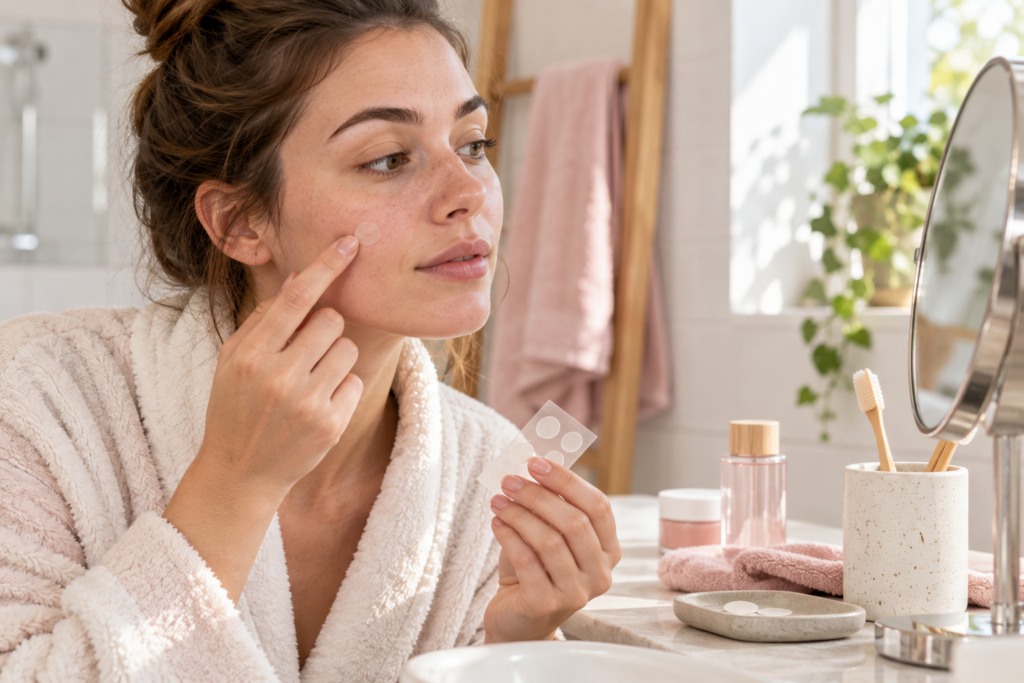
A hydrocolloid patch is most useful when a pimple has a visible white tip at the skin’s surface. If you’re looking at a blackhead, it’s worth leaving the patch aside. Before reaching for anything, take a look without squeezing. The blemish’s colour, shape and position in the pore can help you work out what to use.
A few seconds in the mirror can save you from putting a patch where it is unlikely to help or squeezing until the skin feels sore and looks red.
How to tell a whitehead from a blackhead
A whitehead looks like a small, pale bump, sometimes with redness around it. You can see its tip at the skin’s surface without squeezing. It already looks as though it has come to a head.
This is the type of blemish that Hydrocolloid Patches are designed for. The official product page specifies whiteheads at the skin’s surface and says the patch absorbs impurities from the pimple over 6 to 8 hours.
A blackhead appears as a small, dark dot inside a pore. It may feel slightly rough, but there is no soft white tip to cover. Hydrocolloid patches are not mainly intended for these blemishes; they are designed for whiteheads that have reached the surface.
If you can feel a painful lump beneath the skin but cannot see an opening, do not pierce it or treat it like a surface whitehead.
Still unsure what you’re looking at? Our guide to anti-blemish patches explains their main uses.
How to apply a patch to a whitehead
Evening is a handy time to apply a patch, once you’ve cleansed your face. Remove makeup, sunscreen and sebum, then dry the area thoroughly. Clean, dry skin gives the adhesive a better grip.
Gently cleanse around the pimple and pat it dry with a clean towel, without rubbing. With clean fingers, peel off a patch; tweezers can help if the edge is tricky to grip. Centre it over the white tip, press the edges down gently and leave it in place for a few hours.
Keep oil, rich cream and serum away from the skin directly underneath the patch. Damp or oily products can loosen the adhesive. A patch beside a nostril or at the edge of your mouth may also be harder to keep in place because the skin moves so often. Once it’s on, try to leave it alone.
The official product page recommends applying the patches to clean, dry skin and wearing them for 6 to 8 hours, including overnight. That is the guidance for this product, rather than a wear time you need to follow in every situation.
Should you put a patch on a blackhead?
Start with gentle cleansing, then leave the blackhead alone. Digging at it with a fingernail or squeezing it between two fingers can leave the surrounding skin redder and more sensitive than the blackhead itself.

For whiteheads on the surface
- Draws out impurities from the pimple
- Works in 6 to 8 hours
- Leaves no marks
You can use your usual skincare product if your skin tolerates it. If it contains an exfoliating active ingredient, follow the instructions and avoid layering several potentially irritating products on the same evening. Switching treatments every hour makes it harder to work out what your skin can tolerate.
Spotting a blackhead just before doing your makeup can be tempting, but try not to squeeze it in a hurry. Cleanse and dry the area, then add a little moisturiser if needed. Apply makeup around the pore without rubbing or repeatedly going over the same spot.
If you’ve already squeezed it and the skin is red, stop touching it. Do not put a patch on skin that is burning or weeping. Ask a healthcare professional for advice if the reaction persists. The ANSES guidance on cosmetics stresses the importance of following precautions for use and watching for skin reactions.
What if the pimple has already opened?
Sometimes a whitehead opens accidentally. If that happens, resist the urge to squeeze out anything left inside. Gently cleanse the area and dry it, then apply a hydrocolloid patch if the surface is clean and your skin tolerates it.
The official product page says the patches can be applied to a pimple that has already been popped. They absorb remaining impurities and protect the area from external irritants. Covering the spot can also help you leave it alone, whether you’re checking it in the mirror or reaching for it during the day.
When it’s time to remove the patch, peel it off slowly rather than tugging at the skin. Stop using it if irritation develops, the area becomes very itchy or a reaction spreads around the adhesive. If your skin is sensitive or allergy-prone, the product page recommends testing it on a small area before your first application.
Do not apply a patch to a large wound, a burn or an area showing an unusual reaction. If your skin reacts easily, you may also find our article on Centella Asiatica and sensitive skin useful.
Habits that can irritate your skin
Not every visible pimple is a whitehead. Look closely before choosing a patch, rather than covering a blemish simply because you can see it.
Give the skin a moment to dry after cleansing, too. A patch placed on wet skin may slide or peel off, so those few extra seconds can make it easier to keep in place.
Try not to follow a patch with a scrub, alcohol, squeezing and then another patch. If the skin reacts, you’ll struggle to tell which step caused it. Stick to one targeted step and check the area the next day instead of repeatedly trying something new.
A breakout during a stressful period does not necessarily mean you have a surface whitehead that needs a patch. A patch can protect a blemish at the surface, but it cannot replace a routine that suits your circumstances. Our article on stress-related breakouts takes a closer look.
FAQ: choosing and using a pimple patch
Can you put a hydrocolloid patch on a blackhead?
Blackheads are not the main intended use for these patches, which are designed for whiteheads at the skin’s surface. If the blackhead is flat or sits within a pore, gently cleanse the area and avoid squeezing it.
Should you pop a whitehead before applying a patch?
No, there’s no need to pop it first. Apply the patch directly to the clean, dry pimple. Squeezing it yourself can irritate the skin and increase the chance of leaving a mark. If it has opened accidentally, gently cleanse the area before putting the patch on.
Can you wear the patch during the day?
Yes. The official product page says it can be worn during the day for 6 to 8 hours. Start with clean, dry skin and remove it without rubbing. You can apply makeup around the patch, taking care not to shift it.
What should you do if your skin reacts?
Remove the patch and stop using it if irritation occurs. For sensitive or allergy-prone skin, test it on a small area before the first application. If a reaction persists, ask a healthcare professional for advice.
Sources

Targets subcutaneous pimples
- Actives delivered to the heart of the pimple
- Works in 6 to 8 hours
- Comfortable to wear
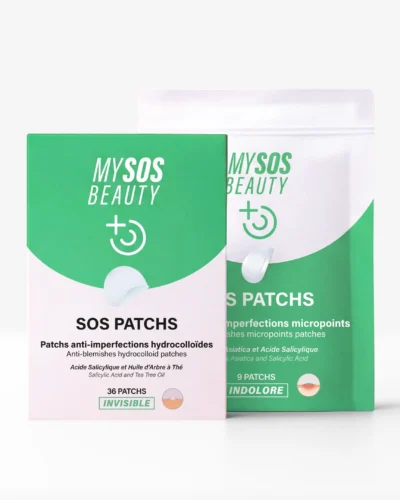 -24%BEST DEAL
Helps reduce the appearance of imperfections
- Soothes redness
- Prevents the appearance of new pimples
- 95.9% natural formula

Comments (0)