

Still waiting for your hair to dry? Start by checking how much water is left after you squeeze it out and whether the strands are packed tightly together. Your products may play a part too. Keep your wash days as similar as you can and change one thing at a time. Slow drying on its own does not mean your hair has low porosity.
Find the spots that stay wet
Your ends might feel dry while the hair at your nape or under the top layers is still wet. Feel around your roots, along the outer lengths, near your neck and through the middle of your hair to find where the moisture lingers.
Gently ease the strands apart with your fingers, without pulling. Look for noticeable dampness and strands that still stick together, and compare those spots with the dry areas. Hair feeling cool is not enough to tell you how much water remains inside the fibre.
What could be keeping your hair damp?
Closely packed strands get less air
You can have fine strands and still have a dense head of hair. Hair pressed against your neck, tucked beneath other layers or tied up does not get the same exposure to air as the hair on top. A thick section of hair is not the same thing as a thick individual strand.
If the top dries while the underneath stays damp, try leaving your hair loose on your next similar wash day. Gently move the lengths away from your neck. There is no need to keep separating your curls; just loosen the areas that are tightly packed.
How much water is left after towel-drying?
If your lengths are still dripping, there is plenty of water left to dry. Next time, try gently squeezing the lengths between your hands, then pressing them with a clean towel to absorb the water. Avoid rubbing or twisting, and see how this compares with your usual method.
Stick with the same towel material while you try this. Changing your towel, products and hairstyle all at once makes it hard to tell what helped.
Check products and rinsing before blaming an ingredient
Does your hair feel coated or sticky, or clump into thick sections? Take a closer look at what you use and how well you rinse. Products left behind after rinsing, or several products layered together, can change how your hair feels and how the strands gather. That does not mean every cosmetic film slows drying.
The review Hair Cosmetics: An Overview notes that silicones differ in how they deposit on hair, adhere to it and wash out. Blaming the whole ingredient family will not tell you what is happening with your hair.
| What you notice | What to check | What to try next wash day |
|---|---|---|
| Wet underneath, dry on top | Strands packed closely together | Move the hair away from your neck, keeping your products the same |
| Lengths still dripping | Water left after towel-drying | Squeeze and blot more evenly with the same towel material |
| Hair feels coated after drying | Rinsing or layered products | Leave out one optional product |
Get to know your hair’s drying pattern
Start with an ordinary wash day. Jot down what you used, how you squeezed and towel-dried your hair, whether you left it loose or tied up, and which spots dried last. If you want to keep track of the time, note when you finished removing excess water and when your whole head of hair seemed dry. There is no universal “normal” drying time you need to match.
Try to dry your hair in the same place each time. A humid bathroom and a well-ventilated room can give you quite different results. Keep your usual washing routine, and thoroughly rinse anything that is meant to be washed out.
Choose just one thing to try differently. You might squeeze out the water more evenly or skip your finishing oil, but do not do both on the same day. Give it another wash day before drawing a conclusion: one faster or slower dry could simply come down to the conditions that day.
If oil is usually your last step, see how your hair dries without it. Keep any product you need for detangling. Our hair oil guide can help you decide where that step belongs in your routine.
A recent colour appointment, haircut or product switch is worth noting too, since your hair may no longer dry quite as it did before. You will find precautions in our article on how colouring affects your hair. There is no need to add a homemade acidic rinse to this experiment. pH in hair care is a separate subject; drying time cannot tell you about it.
Would a heat-activated mist help?
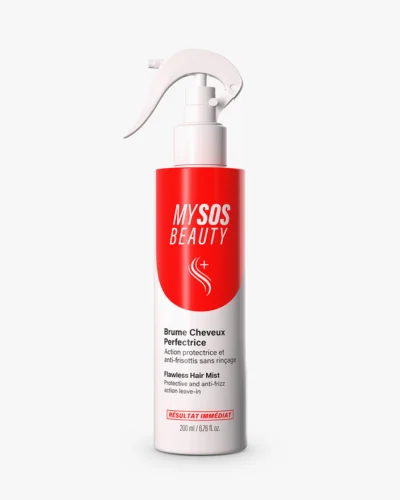
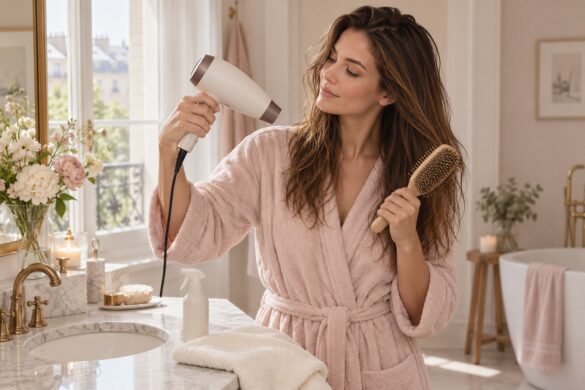
Perfecting Hair Mist is not recommended for speeding up air-drying. The manufacturer says it helps protect against heat, tame frizz and add shine. It needs warm air from a hairdryer to activate, so leave it out of any comparison focused on air-drying.
FAQ
Does slow drying mean my hair has low porosity?
No. How much water remains, how the strands gather, your products and the conditions around you can all affect drying. You cannot work out your hair’s porosity from drying time alone.
Should I use a stronger shampoo?
Not as your first move. Check that you are rinsing thoroughly and take a look at optional products first. Hair taking a long time to dry is not, by itself, a reason to switch to harsh cleansing.
Do I need to change my routine if my hair has always dried slowly?
Not necessarily. If you like how your hair feels and your scalp is comfortable, you can focus on how you leave it to dry. Use your own usual drying pattern as a reference rather than someone else’s hair.

Comments (0)