
Dry shampoo does not replace washing your scalp. It can make a fringe look less greasy or add volume at the roots before you head out. Think of it as a quick touch-up, not a full wash. To remove sweat or leftover styling products, use a rinse-off shampoo. Pay attention to both how your hair looks and how your scalp feels.
How dry shampoo affects greasy hair
Dry shampoo contains small particles that absorb some of the oil on the hair. The roots look less shiny, and the strands may appear less stuck together. As the American Academy of Dermatology explains in its advice on dry shampoo, these particles absorb oil but do not clean the hair. Traditional shampoo and water are still needed.
When you wash your hair, cleansing agents help loosen sebum and dirt, and rinsing carries them away. Without rinsing, some of that material stays on the hair and scalp. Brushing can remove some powder and improve the finish, but it is not a substitute for cleansing. Fragrance can hide an odour without removing its source, either.
Touch-up or wash: how to tell the difference
A slightly greasy fringe before an appointment is not the same as roots covered in hairspray after several touch-ups. After exercise, your hair may look fine even when sweat residue is still present. These examples can help you choose between a quick touch-up and a proper wash.
| Your situation | What dry shampoo can change | The better approach |
|---|---|---|
| Shiny roots, comfortable scalp | Reduce the appearance of oil | A targeted touch-up may be enough for appearance |
| Hair after sweating | Temporarily improve its appearance | Wash to remove sweat and residue |
| Roots covered with styling products or powder | Make them look more matte, while adding more material | Choose a rinse-off wash instead |
| Itching or irritation | No cleansing benefit to expect | Stop applying it and monitor the discomfort |
How to touch up without weighing down your roots
Read the instructions before applying the product. Spray distance, amount and waiting time vary by formula. Use it on dry hair and only where needed, rather than over your whole head. The lengths generally do not need the same treatment as the roots.
- Start with a small amount. You can check the result and add more if needed.
- Leave it on for the stated time, then distribute or brush it through gently as directed.
- On dark hair, check the finish in natural light, where white marks may be easier to see.
- If the roots look floury or feel stiff, do not add another layer to fix the result.
The aim is to improve your hair’s appearance for a while, not to cover every trace of sebum. If excess product does not come away easily, washing is more useful than vigorous brushing, which can pull on the hair.
When build-up becomes uncomfortable
Repeated applications to unwashed roots can leave a powdery feel, visible deposits or a heavy sensation. Sebum, dead skin cells and leftover styling products continue to build up as well. Depending on your scalp and the formula, this can become uncomfortable.
A sticky feeling, itching or persistent deposits are good reasons to stop using touch-ups. Wash gently, massaging with your fingertips instead of scratching with your nails, then rinse thoroughly. You do not need to scrub aggressively to remove the powder.
For a broader look at care for this area, read our article on scalp skinification. If you are comparing the characteristics of your cleansing products, our guide to pH in hair care provides useful context. pH alone is not enough to assess how well a formula is tolerated.
After washing: where a styling mist fits in
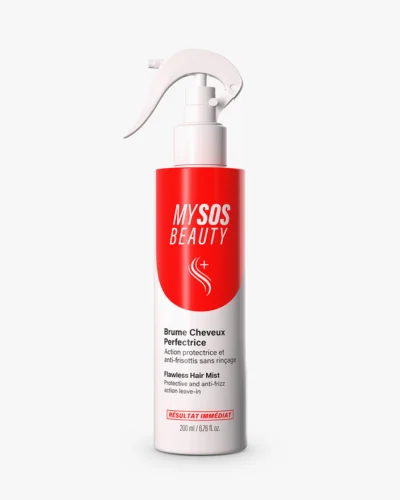
Once your hair is clean, you can use a styling treatment such as Perfecting Hair Mist. According to the manufacturer, it helps tame frizz and add shine. It is neither a dry shampoo nor a cleanser.
On towel-dried, damp hair, spray generously strand by strand, then distribute evenly with your fingers or a detangling brush. Blow-dry with warm air while brushing gently. This activation is essential. The manufacturer recommends not applying another styling product before drying. You do not need to use the mist after every wash.
FAQ
Can dry shampoo be irritating for a sensitive scalp?
Yes. Some people may experience irritation. Stop using the product if it causes discomfort. Persistent itching, redness or lesions are reasons to seek medical advice rather than apply more touch-ups.
Do you need to follow a fixed hair-washing schedule?
There is no universal schedule. Your activities, hair type and comfort all matter. Do not let the mattifying effect of dry shampoo become the only reason to postpone washing.
To continue reading, see our article: The Hair Oil Guide: Which Ones to Use for Every Hair Type?.

Comments (0)