

When you read a hydrocolloid patch label, begin with the ingredient order. The ingredients listed first make up the largest share of the formula, although their exact percentages are not disclosed. Then look at the patch format and the type of blemish it is made for. A surface whitehead and a spot under the skin need different approaches.
Cellulose gum, polymers and paraffinum liquidum may form part of a hydrocolloid patch base. Depending on the product, you may also see salicylic acid, tea tree oil, niacinamide or Centella asiatica. These ingredients are useful reference points, but they make sense only when read alongside the directions for use.
How to read the order of an INCI list
An INCI list shows which ingredients make up most of the formula. It does not reveal the exact percentage of each component, so you cannot calculate an active ingredient’s concentration from its position in the list.
A hydrocolloid patch may contain a hydrocolloid base, cellulose gum, polymers and paraffinum liquidum. Comparing the order across two lists can help you understand how their formulas are structured, but it cannot tell you how effective either product will be or whether it suits a particular blemish.
Read the highlighted actives together with the type of blemish the patch targets. Salicylic acid appears in both references discussed here. Tea tree oil is listed under the INCI name “Melaleuca alternifolia leaf oil”. The microneedle patches also contain niacinamide and Centella asiatica.
How to identify the ingredients in a patch for a whitehead
For an established whitehead, look first for a hydrocolloid base. The formula may also include cellulose gum, polymers and paraffinum liquidum. Hydrocolloid is associated with absorbing impurities from a whitehead at the skin’s surface.
Next, check whether salicylic acid and tea tree oil are included. Tea tree oil appears under its INCI name, “Melaleuca alternifolia leaf oil”. This is worth knowing when a product page uses the common name while the ingredients list uses the international designation.
The Hydrocolloid Patches are intended for surface whiteheads. The box contains 36 patches. The product page recommends applying one to clean, dry skin for 6 to 8 hours, or overnight, then removing it when you wake up. The patch absorbs impurities from an established whitehead and is not intended for a spot under the skin.
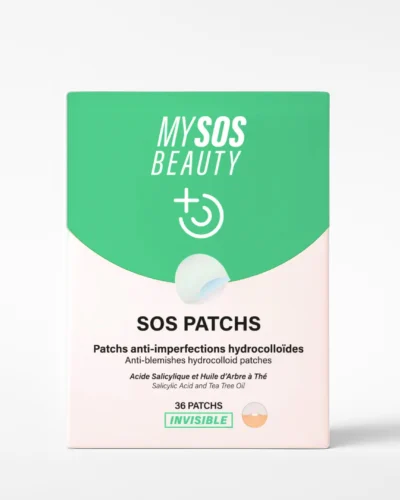
For whiteheads on the surface
- Draws out impurities from the pimple
- Works in 6 to 8 hours
- Leaves no marks
The brand describes it as hypoallergenic and recommends testing it on a small area first. That gives you a chance to check your skin’s tolerance before applying it to the blemish. The packaging also states that the patch draws out impurities, works within 6 to 8 hours and leaves no mark. This final claim refers to the patch, not to a scar.
For more help choosing a format, read how to choose based on whether the blemish is a whitehead or still closed.
How to identify the actives in microneedle patches
When a spot is under the skin, the format becomes just as important as the ingredient list. Microneedle patches are presented for this type of blemish, and their ingredients list includes salicylic acid, niacinamide and Centella asiatica.
The Microneedle Patches contain 200 microneedles, and the box includes 9 patches. The stated application time is 6 to 8 hours. This format is used on a targeted area. It is not a dermaroller and does not replace a full-face treatment.
Several highlighted actives do not tell you how much of each one the product contains. Avoid inferring a dosage from the number of ingredients or their position in the list. Instead, check that the patch is intended for a spot under the skin and follow the stated application time.
Compare two formulas without confusing their uses
Start with the ingredients at the beginning of each list. They indicate the dominant components without revealing their percentages. Then note the named actives and consider them alongside the patch format and the type of blemish it targets.
- For a surface whitehead, look for a hydrocolloid base, followed by salicylic acid and tea tree oil when they are listed.
- For a spot under the skin, check that the product is presented as a microneedle format.
- Do not calculate a percentage from the INCI order.
- Do not confuse a targeted patch with a product intended for the entire face.
- Apply the patch to clean, dry skin when the directions for use require it.
This keeps you from choosing a patch simply because one familiar ingredient stands out. The type of blemish remains the best starting point. To compare the role of salicylic acid in a routine, read lactic or salicylic acid, depending on your skin texture.
The directions for use complete the ingredients list
The INCI list does not replace the application instructions. For both formats discussed here, the stated application time is 6 to 8 hours. Apply the hydrocolloid format to clean, dry skin and remove it when you wake up if you use it overnight.
Keep microneedle patches on the targeted area. They are intended for spots under the skin, and the product page specifies that they are neither a dermaroller nor a full-face treatment. The patch should stay on the affected area rather than being spread across the face.
If you use other products around the area, avoid rubbing the blemish. Toner pads, used without rubbing the blemish, can help you keep your movements gentle, but they do not change which patch suits the blemish.
Three questions to help you read the ingredients
Does cellulose gum indicate the percentage of hydrocolloid?
No. Its position helps you understand the formula’s structure, but the ingredient order does not give you the percentages. Use it to compare formulas without trying to calculate a concentration.
Which format should you choose for an established whitehead?
Choose the hydrocolloid patch intended for surface whiteheads. Apply it to clean, dry skin, then remove it after 6 to 8 hours or when you wake up. If the brand recommends it, test the product on a small area first.
How do you apply a microneedle format to a spot under the skin?
Choose the format presented for subcutaneous pimples. Check for salicylic acid, niacinamide and Centella asiatica, then apply it to the targeted area for 6 to 8 hours, following the directions for use.
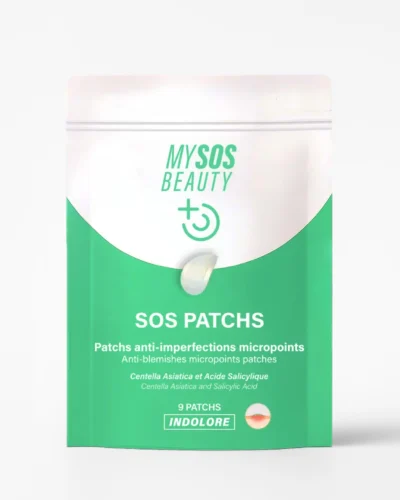
Targets subcutaneous pimples
- Actives delivered to the heart of the pimple
- Works in 6 to 8 hours
- Comfortable to wear
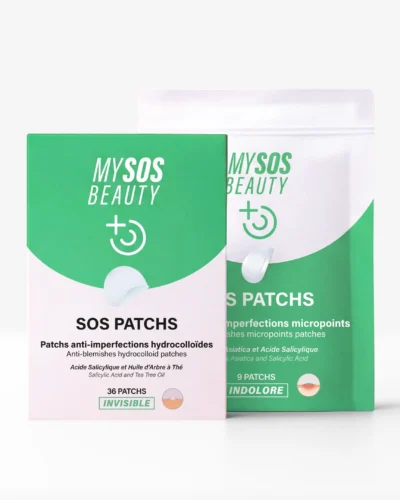 -24%BEST DEAL
Helps reduce the appearance of imperfections
- Soothes redness
- Prevents the appearance of new pimples
- 95.9% natural formula

Comments (0)