
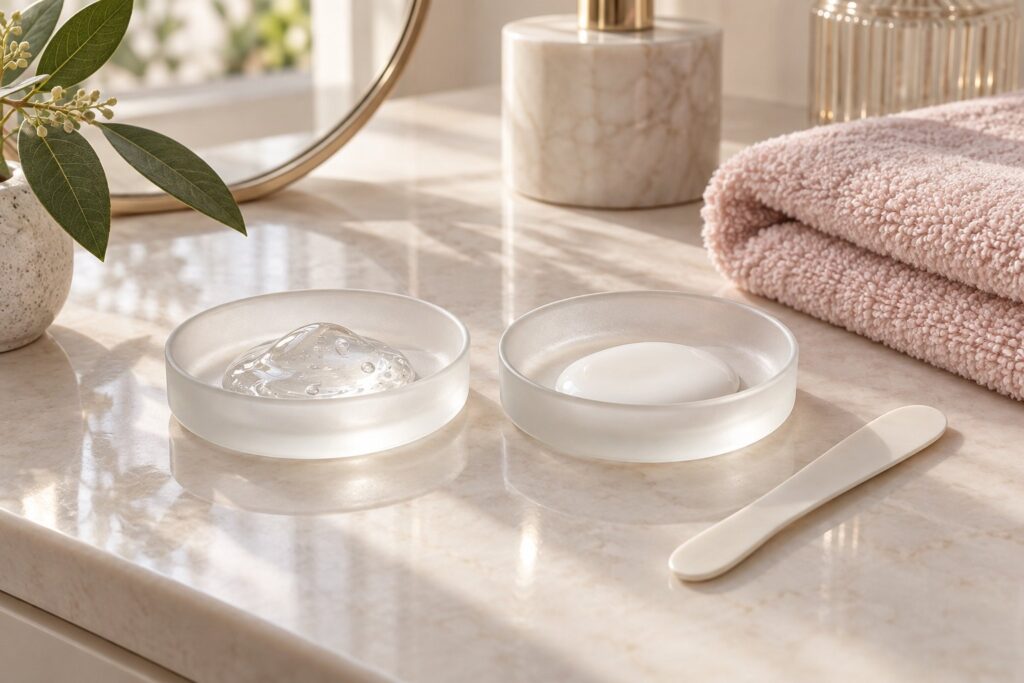
For rough texture and a dull complexion, lactic acid may be a suitable option. For blackheads and clogged pores, salicylic acid is usually more targeted. These are useful starting points, but they cannot predict how effective or gentle a product will be for your skin.
If your skin burns, feels tight or stays red, focus on restoring its comfort before using an exfoliant.
Lactic acid and salicylic acid: the main differences
Lactic acid (LACTIC ACID) is an AHA, or alpha hydroxy acid. It helps loosen dead skin cells on the surface, so its cosmetic benefits mainly relate to skin feel, texture and radiance.
Salicylic acid (SALICYLIC ACID) is a BHA, or beta hydroxy acid. Because it has an affinity with lipids, it can be useful on areas with more sebum and a tendency to develop clogged pores. It also exfoliates the surface, so the benefits of the two acid families can overlap. Our guide to salicylic acid explains how it works on pores.
| Criterion | Lactic acid — AHA | Salicylic acid — BHA |
|---|---|---|
| Characteristic action | Surface exfoliation | Exfoliation that may help with clogged pores |
| Primary goal | Smoother-feeling skin and a less dull complexion | Improving the appearance of blackheads and blemishes linked to congestion |
| Concrete example | Rough cheeks and uneven surface texture | A nose with blackheads or a chin prone to comedones |
| Shared limitation | May irritate depending on the formula and your skin | May dry out or irritate depending on the formula and your skin |
Choose according to what you see
Your priority: smoother-feeling skin
If your cheeks feel rough and makeup highlights uneven texture, but you do not have many blackheads, a product containing lactic acid may suit your goal. Roughness with flaking and tightness, however, may point to sensitised skin rather than a need for more exfoliation.
Your priority: fewer clogged pores
A product containing salicylic acid may be worth considering if you have blackheads or comedones. A comedone is a clogged follicular opening, as DermNet explains. It is not simply a visible pore.
Keep the goal realistic: skincare can improve the appearance of pores, but it cannot remove them. The American Academy of Dermatology notes that suitable skincare can make pores look less visible.
Why the formula affects the result
Concentration, pH and the other ingredients affect both performance and tolerance. The format matters too. A lotion applied with a pad is wiped over the skin, while another skincare product may be spread with your fingers. An AHA is not automatically gentler than a BHA.
The acid concentrations and pH of the two products below are not listed in the official product information consulted. Their exfoliating strength therefore cannot be ranked. The position of an ingredient in the INCI list cannot be used to calculate its percentage either. To learn more, read our guide to the role of pH when choosing skincare.
Toning and Purifying Pads: texture and the appearance of pores
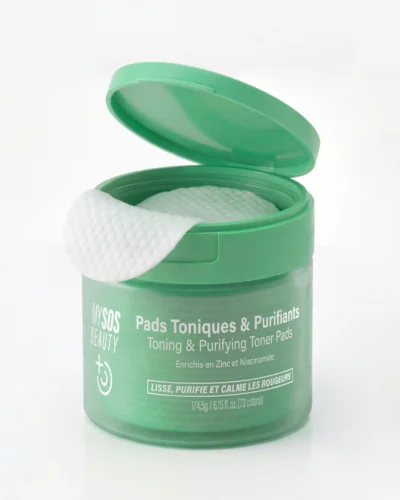
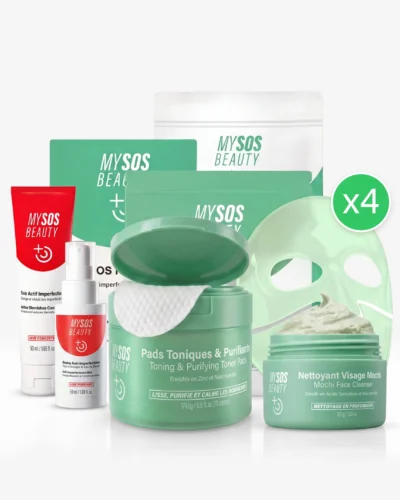
Toning and Purifying Pads contain lactic acid, niacinamide and zinc, as well as glycerin, panthenol and allantoin. The manufacturer presents them as a product that improves skin texture and the appearance of pores. It recommends gently gliding the pad over the skin and adjusting the pressure according to how your skin feels.
The ingredient list also mentions SODIUM SALICYLATE, the sodium salt of salicylic acid. This name is not interchangeable with SALICYLIC ACID. Its presence alone is not enough to attribute the exfoliating properties of a product containing salicylic acid to the pads.
Active Blemish Care: blemishes and sebum
Active Blemish Care combines salicylic acid with succinic acid and zinc. According to the manufacturer, the formula helps reduce the appearance of blemishes and regulate sebum.
The manufacturer recommends testing the product on a small area before applying it to the face and using sunscreen in the morning, noting that salicylic acid may make the skin more sensitive to UV rays. It advises against using this product in cases of rosacea or eczema.
When to stop exfoliating
Burning, persistent redness, peeling skin and unusual tightness do not show that a product is working. Stop using it and return to a gentle routine. Our guide to a damaged skin barrier can help you recognise these signs.
Follow the product instructions and use sun protection during the day. The AAD recommends not exfoliating skin with open wounds or sunburn. If irritation persists, seek medical advice.
FAQ: how do you decide?
Combination skin, rough cheeks and blackheads in the T-zone: what should you choose?
Start by identifying the main issue. If your cheeks feel tight, prioritise their comfort. Otherwise, choose one product based on your main goal rather than automatically combining acids.
Does dry skin always have to choose lactic acid?
No. Dry skin may mainly lack comfort. Lactic acid is still an exfoliant, not a substitute for hydration.
Is the INCI list enough to make a decision?
It identifies the ingredients, but it cannot predict their exact effect. Consider it alongside the product’s purpose, instructions and your skin’s reaction.

Helps reduce the appearance of imperfections
- Soothes redness
- Prevents the appearance of new pimples
- 95.9% natural formula

Comments (0)