The menstrual cycle does more than affect mood and energy – for many women it also triggers those frustrating hormonal breakouts. As hormone levels swing, you may notice inflamed pimples, extra shine and heightened skin sensitivity. Understanding why these flare-ups happen and how to stay one step ahead can make a real difference to your complexion. Below we’ll explore the science behind hormonal acne and share practical tips to help you manage it throughout each phase of your cycle.
What exactly is hormonal acne?
Hormonal acne refers to breakouts that are largely triggered by the hormonal shifts that occur during the menstrual cycle. While it most commonly appears in adult women, some teenagers can be affected as well.
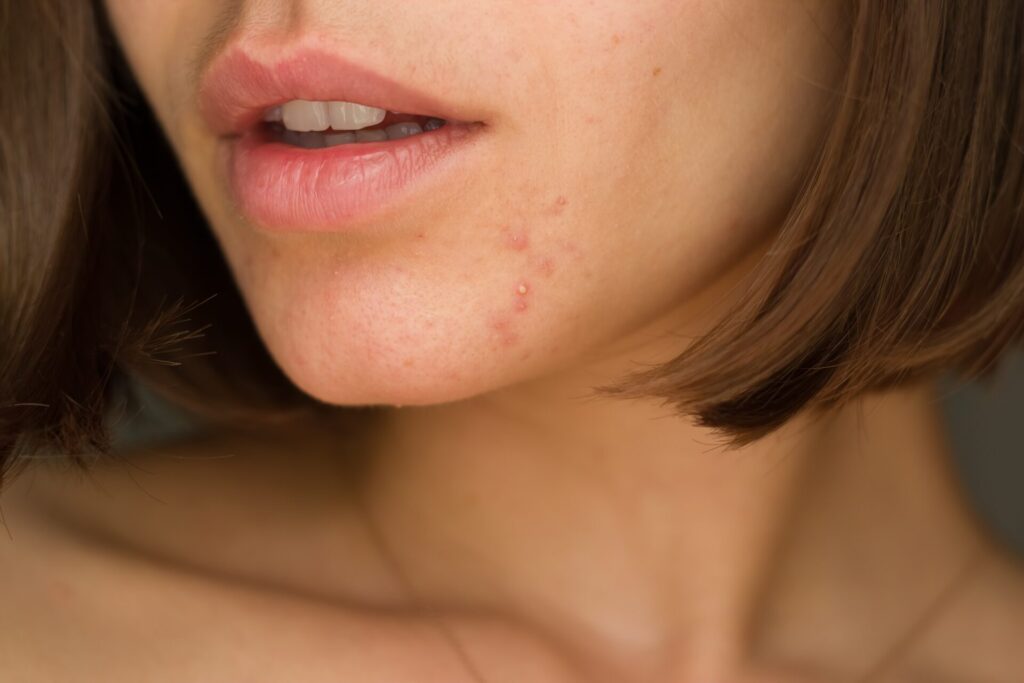
It is generally characterised by:
- Painful inflammatory breakouts (cysts, deep red spots).
- A tendency to appear on the lower face (jawline, chin, lower cheeks).
- Predictable flare-ups, typically around the same time each month (often before your period).
Why do hormones have such a strong impact on the skin?
The female menstrual cycle is governed by the constant fluctuation of hormone levels, particularly two key hormones: oestrogen and progesterone.
- First half of the cycle (follicular phase): During this phase, oestrogen levels gradually rise. This hormone is beneficial for the skin — it supports hydration, limits sebum production, and generally gives the complexion a clearer, more radiant appearance.
- Second half of the cycle (luteal phase): After ovulation, progesterone becomes dominant. This hormone stimulates the sebaceous glands, increasing sebum production. Excess sebum can clog pores and create an environment that encourages bacterial growth, leading to skin inflammation (spots, cysts).
As your period approaches, the sudden drop in oestrogen levels further aggravates this process, which is why blemishes tend to appear so regularly at this time.
How can you anticipate hormonal acne flare-ups?
Since hormonal fluctuations are predictable, it is entirely possible to adapt your beauty routine to each phase of your cycle:
1. Follicular phase (just after your period)
Your skin is generally clearer and more luminous.
- Keep your routine simple, gentle, and hydrating.
- Continue to gently exfoliate to prevent the build-up of dead skin cells and excess sebum.
2. Ovulation (mid-cycle)
Your skin may be at its best, but this is the ideal moment to start prevention.
- Begin incorporating gentle purifying actives (salicylic acid, niacinamide, zinc), which can help gradually regulate sebum production.
- Opt for lightweight, hydrating, non-comedogenic products.
3. Luteal phase (before your period)
This is the most critical period.
- Use targeted blemish-fighting treatments (salicylic acid gel, anti-spot patches) at the first signs of inflammation.
- Avoid overly rich or heavy products that could worsen pore congestion.
- Embrace a lifestyle that may help soothe the appearance of inflammation: a balanced diet, reduced refined sugar intake, proper hydration, and stress management.
Key ingredients that may help prevent and soothe the appearance of hormonal acne 🍃
- Salicylic acid: can help gently exfoliate, unclog pores, regulate sebum production, and soothe the appearance of inflammation.
- Niacinamide (vitamin B3): can help regulate sebum, reduce the appearance of redness, and strengthen the skin barrier.
- Zinc: it may help purify and soothe, and may help target the bacteria involved in acne.
- Retinol (use with care and according to your skin’s tolerance): can help regulate sebum production, refine skin texture, and prevent new blemishes from forming.
The My SOS Beauty approach 🌟
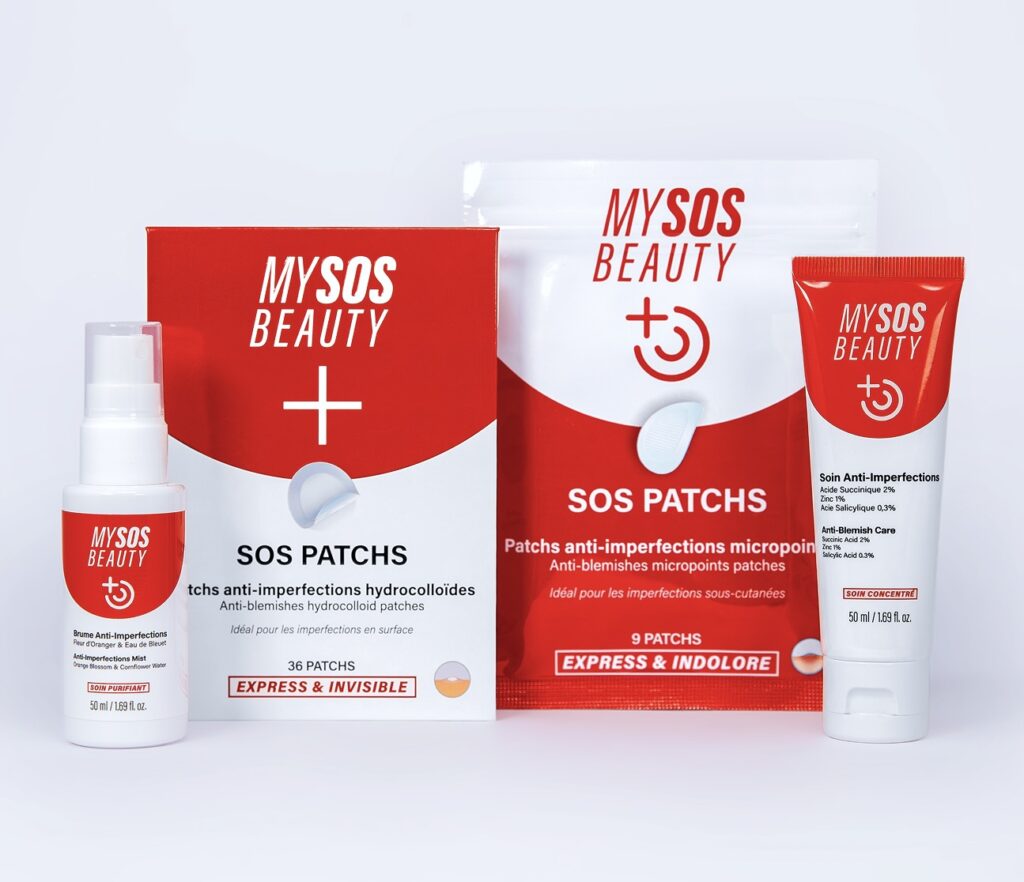
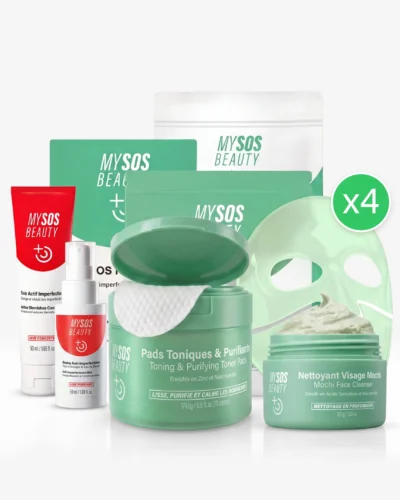
At My SOS Beauty, we have developed a complete anti-blemish range specially formulated to help address acne-related concerns, whether hormonal or not:
- Soin Actif Anti-Imperfections: Formulated with salicylic acid, zinc, and succinic acid, it helps reduce existing spots and prevent new blemishes from appearing.
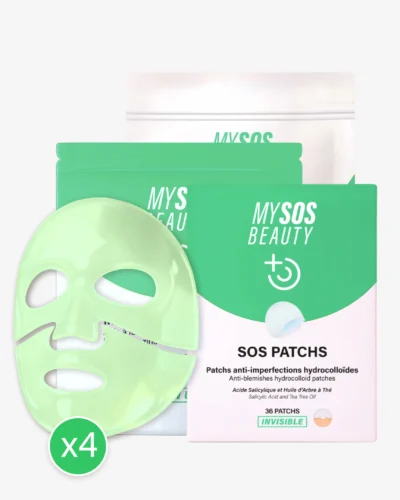
- SOS Patchs Micropoints et Hydrocolloïdes: These targeted patches are designed to act quickly and can help visibly reduce the appearance of inflammation, redness, and spot size from the moment they appear.
Explore all our solutions on our website My SOS Beauty, which can help you manage your hormonal acne every day.

Helps reduce the appearance of imperfections
- Soothes redness
- Prevents the appearance of new pimples
- 95.9% natural formula
Frequently asked questions
Hormonal acne usually shows up as painful inflammatory breakouts, such as cysts or deep red spots. They often appear on the lower face: the jawline, chin and lower cheeks. Timing is another clue, as flare-ups tend to come back around the same time each month, often before your period. It mainly affects adult women, although some teenagers can be affected too.
After ovulation, progesterone becomes dominant. This hormone stimulates the sebaceous glands and increases sebum production. Excess sebum can clog pores and create an environment that encourages bacterial growth, which can lead to inflammation. As your period approaches, the drop in oestrogen levels makes this process worse. That’s why blemishes tend to reappear so regularly at this point in your cycle.
Yes, generally. During the follicular phase, just after your period, oestrogen levels gradually rise. This hormone supports hydration and limits sebum production, so your complexion often looks clearer and more radiant. It’s a good time to keep your routine simple, gentle and hydrating, while continuing to exfoliate gently to limit the build-up of dead skin cells and excess sebum.
The luteal phase is the most sensitive time. You can use targeted blemish treatments, such as a salicylic acid gel or anti-spot patches, at the first signs of inflammation. Avoid overly rich or heavy products, which could worsen pore congestion. Your lifestyle matters too: a balanced diet, less refined sugar, proper hydration and stress management.
Several actives are worth considering. Salicylic acid gently exfoliates and helps unclog pores. Niacinamide, or vitamin B3, can help regulate sebum, reduce redness and strengthen the skin barrier. Zinc is purifying and soothing. Retinol can also help regulate sebum and refine skin texture, but it should be used with care and according to your skin’s tolerance.
Conclusion: Plan ahead to better care for your skin! ✨
Hormonal acne can feel discouraging, but by gaining a deeper understanding of your hormonal fluctuations and thoughtfully adapting your routine, you can significantly reduce its impact on your skin. Take the time to observe your skin throughout your cycle, build a targeted routine, and give it the care it truly needs.
Your skin will thank you with a noticeably clearer, healthier, and more balanced complexion! 🌸
Related articles
- Stress and Skin: How to Break the Vicious Cycle of Blemishes?
- Makeup and acne: how to choose your products without making breakouts worse?
- Back and body acne: understanding the causes to find effective solutions
Useful categories: Blemishes.
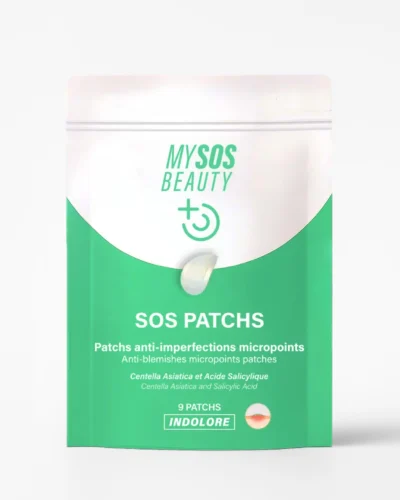
Targets subcutaneous pimples
- Actives delivered to the heart of the pimple
- Works in 6 to 8 hours
- Comfortable to wear