
White particles at your roots can be puzzling, especially when you’ve just washed your hair. A deposit that appears after styling may be dried product. Fragments sitting on your scalp may be shed skin cells. Colour alone won’t tell you the difference or confirm that you have dandruff.
Keep your routine simple for a while. Wash and rinse thoroughly, then take a look without scratching. If itching or redness continues, ask for advice rather than reaching for another product.
Take a closer look before changing your routine
Do the particles appear after you use a product?
Perhaps your scalp looks clear after washing, but small particles appear once your gel dries or you’ve applied dry shampoo. That timing makes product residue worth considering. Look at where the particles gather, too. A powdery parting after spraying or a deposit on slicked-back hair may sit exactly where you applied the product.
It’s a clue, not a definite answer. A product can make flakes that were already there more noticeable or cause discomfort. A recent change in your routine doesn’t prove what’s behind the particles.
Look at where they sit
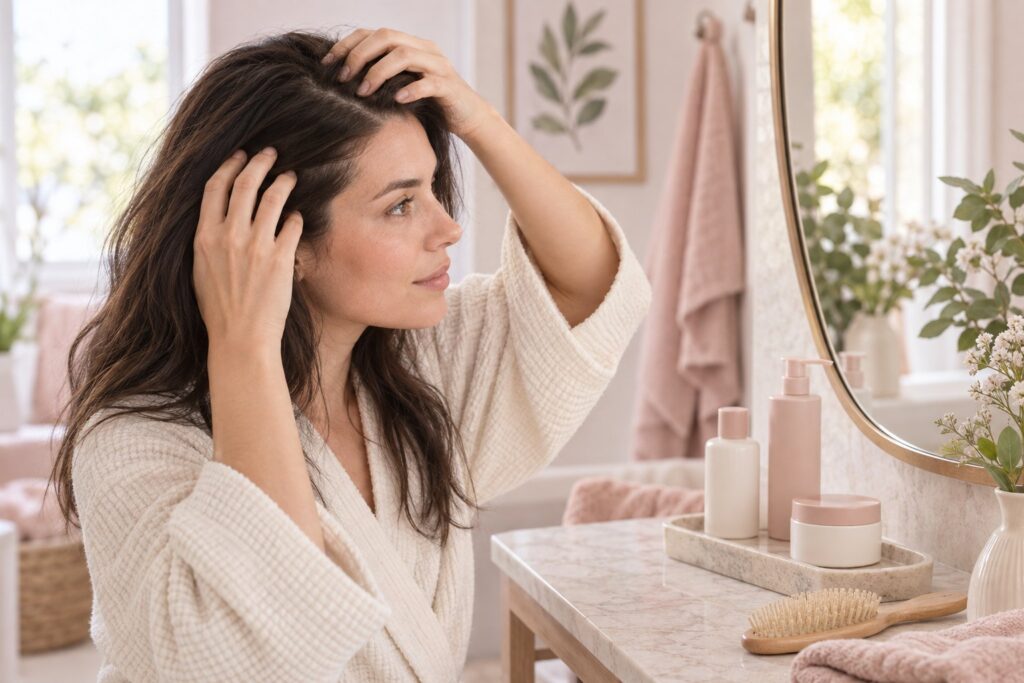
Stand in front of a mirror with even lighting and gently part your hair with your fingers. Look for powder scattered over the hair near your roots, fragments that seem attached to the skin, or a film breaking up on a styled section of hair.
There’s no need to pick at anything that’s stuck. Cosmetic residue can cling to hair, and shed skin can end up there as well. How firmly a particle holds on won’t tell you its source.
Powder appearing after dry shampoo may be a deposit from the application, though that doesn’t mean every particle comes from the product. Small fragments after a styling product dries make dried product or layering worth checking, but you’ll need a comparison before drawing a conclusion.
Fragments visible on the skin may be skin flakes; they don’t confirm dandruff. And if everything disappears after washing, you know the wash removed it—not exactly where it came from.
Use your next wash to compare
Before washing, note what you’ve used since your last wash: dry shampoo, styling products, leave-in care or oil, for example. You can also take a photo of your parting. Keep the lighting and framing similar when you take the next one so it’s easier to see any change.
Use your usual shampoo and follow its instructions. Massage your scalp with your fingertips, not your nails, then rinse thoroughly, separating sections of hair as you go. The American Academy of Dermatology recommends concentrating shampoo on the scalp rather than applying it throughout the lengths.
Let your hair dry, then look again before putting on another styling product. If the particles have gone and return specifically after you use one product, you’ve got a useful comparison. If they’re still there, or come back without any product application, washing alone won’t explain the cause.
Resist the urge to keep washing until your scalp looks “perfectly clear,” or to try an improvised scrub. You could irritate the skin and make it harder to work out what’s happening.
Cut back on residue, not add another layer
For now, skip optional steps that leave several formulas layered at your roots. Apply each product only where its instructions recommend, and rinse out anything that’s meant to be removed. It’s worth checking how you use dry shampoo: the American Academy of Dermatology explains that its particles absorb oil, but it doesn’t clean your hair.
Adding oil won’t help you identify the particles. If oil is already part of your routine, our hair oil guide can help you decide how it fits into your hair care. Nor can you tell a product’s pH from a white deposit. Our article on pH in hair care explains what pH means.
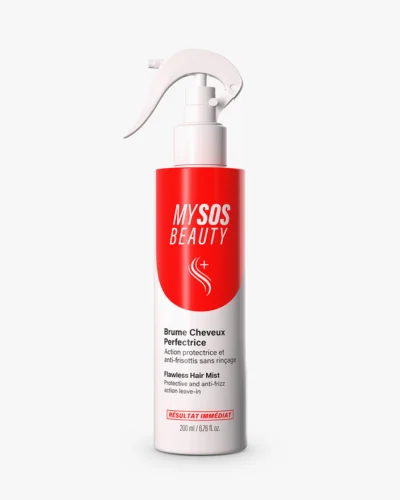
What if you use Perfecting Hair Mist?
Perfecting Hair Mist is intended for the hair fibre, not the scalp. It isn’t a treatment for skin flakes. The manufacturer says it helps reduce frizz and increase shine. Apply it generously to freshly washed, damp, towel-dried hair, working section by section, and distribute it evenly. Blow-drying with hot air is essential to activate it. For the best result, the manufacturer instructs you not to use another styling product before this blow-drying step.
When it’s time to ask for advice
If itching or redness persists, speak to a pharmacist or dermatologist. Pain, sores or unusual hair loss also need medical advice. Bring your observations and the names of the products you’ve used; they can help you explain what you’ve noticed. Our article on scalp care goes into the subject further, but it doesn’t replace an examination.
FAQ
Are particles that fall onto your shoulders always dandruff?
No. Product residue can come loose too. Seeing particles on your shoulders doesn’t tell you where they came from.
If everything disappears after washing, was it all product residue?
Not necessarily. Washing can remove cosmetic deposits as well as shed skin cells. A more useful clue is whether the particles return after you apply a particular product.
Should you scratch to see whether the particles come off?
No. Gently separate sections of hair to look at your scalp instead. Leave anything that’s stuck in place, especially if the skin underneath is red or tender.

Comments (0)