
No. You cannot determine whether a face cream promotes comedones by adding up the ratings of its ingredients. These ratings can draw attention to a particular substance, but they cannot predict how the finished product will behave. To make an informed choice, look at the complete formula, the information available about the finished product and the way your own skin responds.
An ingredient with a concerning rating deserves a closer look, not an automatic rejection. Esters in a cream offer a useful example of how to read these classifications.
What a comedogenicity rating actually measures
Comedogenicity refers to the ability to promote the formation of comedones. As DermNet explains, a comedone is a blocked follicular opening. It is not the same as shiny skin or the greasy feel of a cream.
Rating lists summarise results obtained under specific conditions, including the substance tested, its concentration, the vehicle, the application area and the testing protocol. When those details are missing, the figure can seem more universal than it really is. Without a source or method, it is difficult to know what the classification represents.
A rating is neither a percentage risk of spots nor an overall quality score. It does not measure irritation or allergy either. Keeping these distinctions in mind helps prevent a warning based on one particular test or application from becoming a verdict on the whole product.
Why an isolated ingredient does not describe the whole cream
Concentration changes the interpretation
Finding a name in the INCI list confirms that the ingredient is present, but not how much is used. Ingredients are generally listed in descending order by weight. Those used at low concentrations may then appear in any order, in accordance with the rules set out in the article on cosmetic product labelling.
You therefore cannot use an ingredient’s position to calculate its dosage. An ingredient near the end of the list is not automatically negligible. Its presence also does not mean that it was used under the same conditions as in the test that produced its rating.
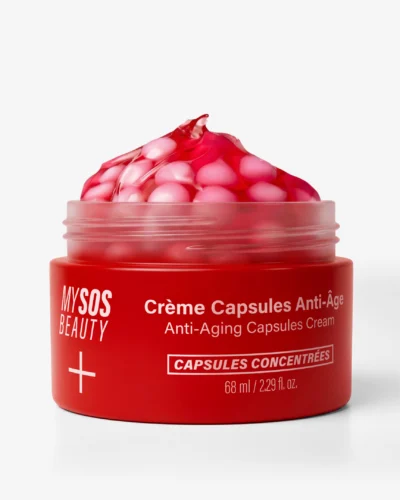
Skin looks smoother
- Concentrated encapsulated actives
- With Ectoine and Retinal
- 88.5% naturally-derived ingredients
The finished formula must be assessed as a whole
In a cream, the ingredients work together to create a system that affects the texture and the way the product sits on the skin. Testing one substance in isolation is not the same as assessing the complete formula.
A study published in the Journal of the American Academy of Dermatology shows that finished products containing ingredients considered comedogenic are not necessarily comedogenic themselves. This does not guarantee that every cream will be well tolerated, but it explains why “flagged ingredient = comedogenic product” is not a reliable shortcut.
Esters as an example of how to read an INCI list
The official ingredient list for the Anti-Aging Cream Capsules includes ISONONYL ISONONANOATE, ETHYLHEXYL PALMITATE and ISOPROPYL MYRISTATE, among others. These esters contribute to the product’s emollient properties and skin feel. Belonging to the same family does not make them interchangeable.
| Ingredient identified | Useful interpretation | Conclusion to avoid |
|---|---|---|
| ISONONYL ISONONANOATE | An emollient present in the formula. | Its position makes it possible to calculate its concentration. |
| ETHYLHEXYL PALMITATE | An ester to assess in the context of the complete product. | Its rating applies directly to this cream. |
| ISOPROPYL MYRISTATE | Its presence may be worth noting if you have previously reacted poorly to products containing it. | It will necessarily be responsible for future spots. |
These names help you read the ingredient list, but they do not provide a diagnosis. The INCI list alone cannot establish that this cream is either comedogenic or non-comedogenic. According to the manufacturer, it is intended to make the skin look smoother. That benefit says nothing about comedone formation.
Choosing a product and observing your skin
- Start with your history. Keep track of products your skin tolerated well or poorly instead of creating a blacklist after a single experience.
- Avoid changing several things at once. Introducing multiple new products together makes it harder to identify which one was associated with a reaction.
- Describe what changes. Note the introduction date, the areas affected, the appearance of blackheads or small bumps, as well as redness and stinging.
- Do not push through discomfort. A persistent reaction warrants stopping the new product and, if necessary, seeking dermatological advice.
For example, increased shine without a new lesion does not establish comedogenicity. It is a different observation, discussed in our article on excess sebum. Immediate stinging does not prove that the pores are blocked either.
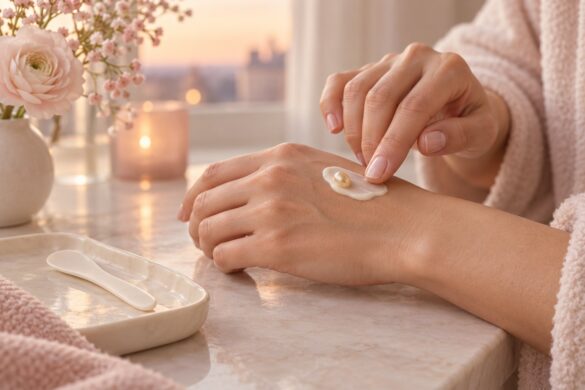
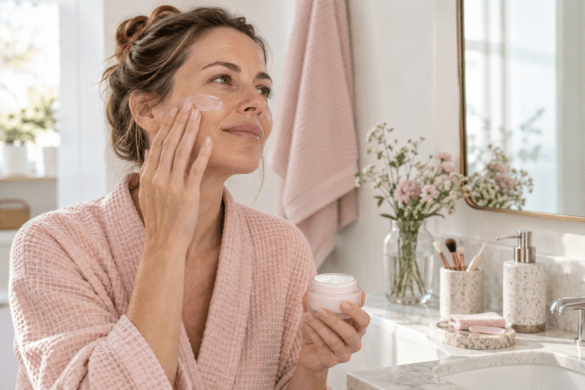
For this cream, follow the manufacturer’s instructions: use the spatula to scoop out a small amount of cream and one capsule, mix them on the back of your hand, then apply in the evening after your serum, avoiding the eye area. Massage until fully melted into the skin. Introduce it gradually and use sun protection during the day.
Finally, do not blame every breakout on an ester. The factors that may contribute to blemishes go beyond the composition of a skincare product. Avoiding every emollient texture does not address the needs of oily but dehydrated skin either.
FAQ: useful questions before sorting through your skincare products
Can you calculate an overall comedogenicity rating?
No. Adding or averaging ratings ignores concentrations and the behaviour of the complete formula.
Can a localised test rule out comedones?
No. It may help identify a local reaction, but it cannot predict comedone formation when the product is used across the entire face.
Should you avoid an ester that was already present in a poorly tolerated product?
Keep it as a possible clue, not a proven culprit. A reaction to a cream does not make it possible to isolate the responsibility of one ingredient.

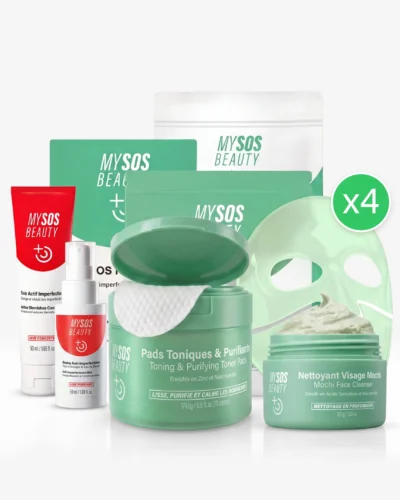
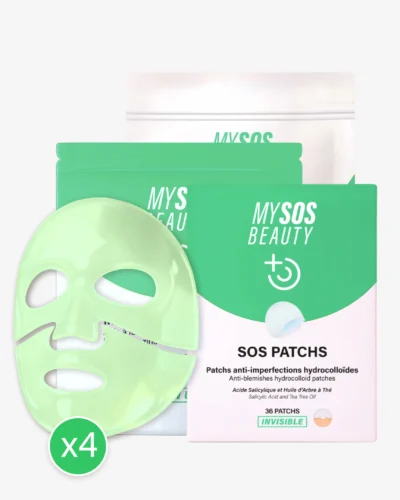
Helps reduce the appearance of imperfections
- Soothes redness
- Prevents the appearance of new pimples
- 95.9% natural formula
Comments (0)