
If your hair smells unpleasant after washing, start by comparing it with your towel and the accessories you use. Make sure your roots are fully dry and that you have rinsed out every rinse-off product properly. Fragrance may cover the smell for a while, but it also makes the source harder to identify. If the smell continues after these checks, especially alongside itching or irritation, seek medical advice.
Notice when the smell starts
Does it appear as soon as you rinse, after towel-drying, once you brush your hair, or only when you let it down? The timing can point you towards the first thing worth checking.
Next time you wash your hair, smell your dry towel, your brush and one accessory you use regularly, such as a hat or scrunchie. Check them separately, then compare each one with a rinsed section of hair before it touches anything. This cannot identify a medical condition, but it may show whether an item is transferring the smell to your hair.
| What you notice | What to check first |
|---|---|
| The smell appears after towel-drying | Compare it with the towel and try a clean, completely dry towel. |
| It appears after brushing | Inspect the brush and remove any visible hair or build-up. |
| It returns when you let your hair down | Check for dampness near the roots and beneath thicker sections of hair. |
| It remains on dry hair that has not touched accessories | Review how you wash and rinse, then seek medical advice if it persists. |
Rule out your towel and accessories
A clean towel must be fully dry too
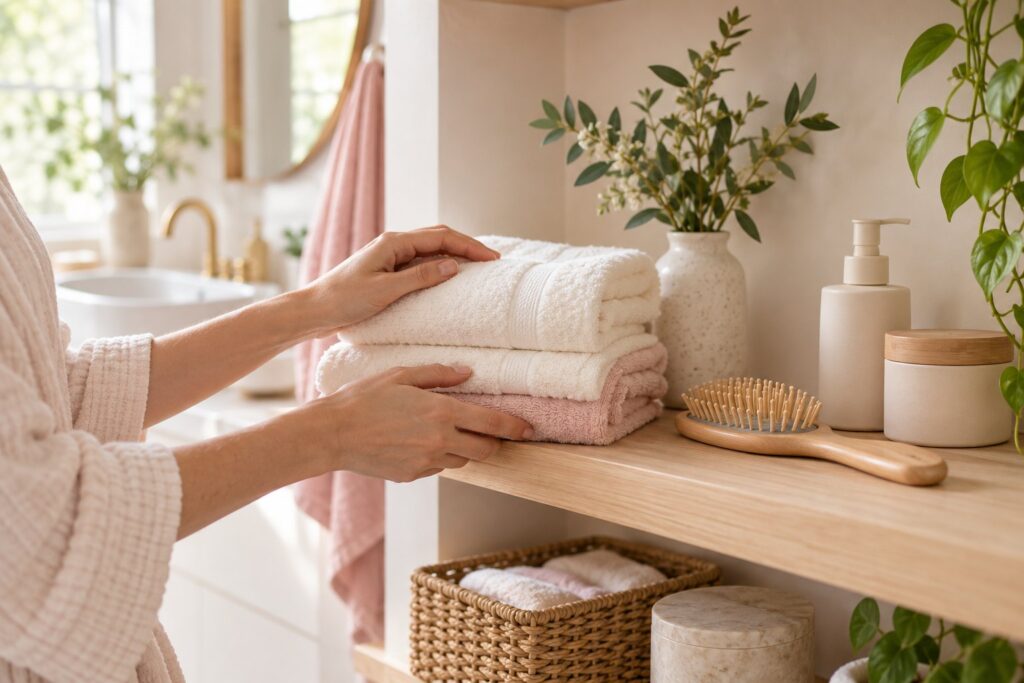
Smell your towel when it is dry, even if it looks clean. For comparison, use another towel that has been freshly washed and completely dried. After use, spread it out instead of leaving it scrunched up or in a closed bag.
Gently squeeze water from your hair rather than rubbing it vigorously. If the smell appears only after this contact and resembles the towel’s smell, look at how you wash and dry the towel before changing your hair care routine.
Check everything that touches clean hair
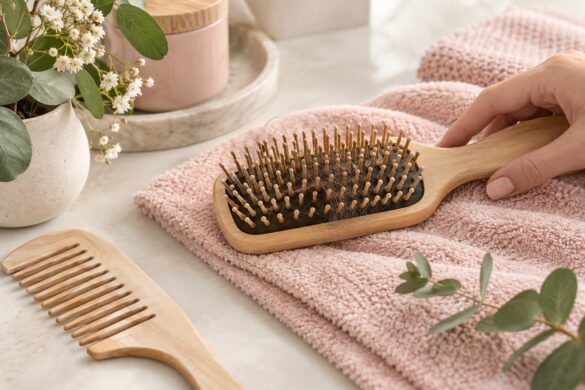
Remove hair caught in your brush and inspect its base. Follow the cleaning instructions for its materials, then let it dry completely. Do not immerse a brush unless it is designed for this. If the smell appears after using them, check your hat, headband, scrunchie and pillowcase too.
Make sure your roots are dry
Your ends may feel dry while other areas are still damp. Gently separate your hair and check the nape of your neck, the back of your head and any thicker sections. If they are damp, wait until they are dry before deciding whether the smell remains.
Let your hair dry loose instead of putting it under a hat or tying it into a bun while wet. If you use a hairdryer, move the airflow between sections. Avoid holding it over one area or using uncomfortably high heat. Compare the smell again once your roots and lengths are dry.
Review washing and product residue without harsh cleansing
Apply shampoo to your scalp rather than simply working the lather through your lengths. The American Academy of Dermatology recommends focusing shampoo application on the scalp. Massage gently with your fingers and rinse thoroughly, including behind your ears and at the nape of your neck.
Check the instructions for each product. A rinse-out conditioner should not be used as a leave-in treatment. If your hair still feels sticky or heavily coated, cut back on optional products so the comparison is clearer. Review how you use hair oils instead of adding a fragranced oil to hide the smell.
Your hair’s pH cannot be identified by its smell. Our article on pH in hair care explains what pH means. Do not improvise a homemade acidic rinse or scrub your scalp vigorously in an attempt to fix the smell.
A styling mist cannot replace these checks
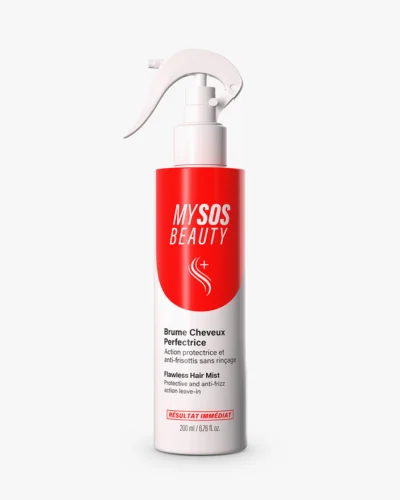
Perfecting Hair Mist is not a cleanser or deodoriser. The manufacturer says it helps protect against heat, control frizz and add shine. It does not deal with a persistent smell.
If you use it for styling, follow the application instructions: apply it to damp hair, distribute it evenly, then blow-dry with warm air while brushing gently. The manufacturer advises against applying another styling product before this drying step.
FAQ: what if the smell keeps coming back?
Should I wash my hair again straight away?
Not necessarily. If the smell comes from your towel or an accessory, washing again without dealing with that contact may lead to the same result. Check these items first and make sure your hair is dry.
Can hair perfume help?
It may mask the smell temporarily, but it will not help you find its source. Avoid using it while you carry out these checks, especially if your scalp feels uncomfortable.
When should I seek medical advice?
Seek medical advice if the smell continues despite using clean towels and accessories, rinsing thoroughly and drying your hair completely. This matters even more if you also have itching, redness, pain, crusting or oozing. Our article on scalp blemishes offers further context, but persistent discomfort needs an examination rather than more products.
Comments (0)