
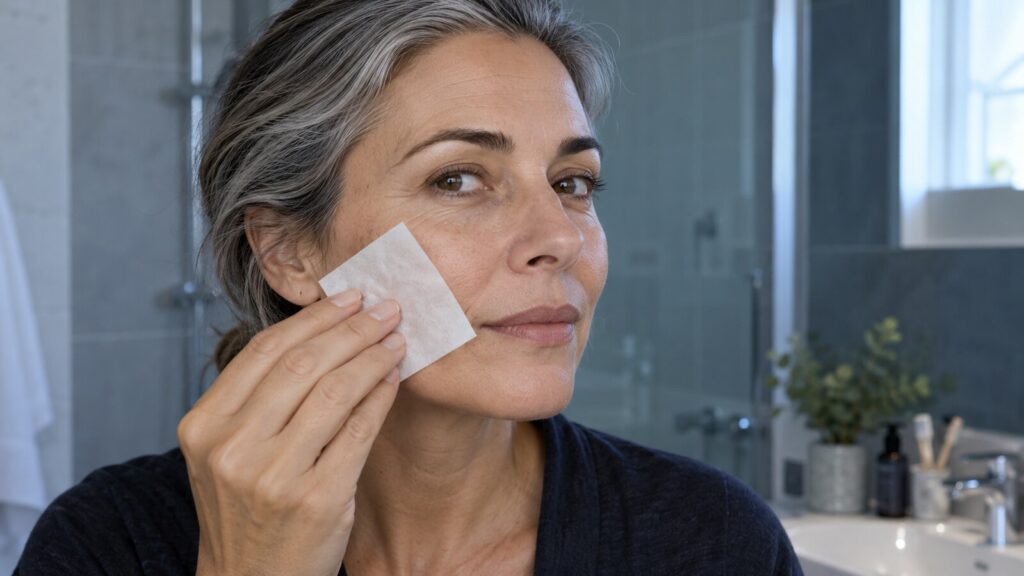
Yes, you can use a pimple patch on oily skin. Cleanse the area, pat it dry without rubbing, then give it a few moments before placing the patch directly over the pimple. This helps it adhere properly.
The right patch depends on the pimple. Choose a hydrocolloid patch for a whitehead that has reached the surface, and a microneedle patch for a closed bump beneath the skin. In both cases, apply it to the pimple itself rather than covering the whole T-zone.
Prepare the area before applying the patch
Oily skin can look shiny again soon after cleansing, especially across the forehead, nose and chin. That is not a reason to apply the patch straight away. The skin underneath needs to be clean and dry.
Once you have cleansed, gently pat the area dry. Avoid rubbing over the pimple, then wait a few moments for any remaining moisture to disappear.
Cream, oil or a damp layer between the patch and your skin can affect adhesion. You only need to prepare the area around the pimple, not necessarily the entire T-zone. If the surrounding skin still looks shiny, use blotting paper there without covering the patch.
For a closer look at the difference between a whitehead and a closed bump, see how to choose according to whether the pimple is white or still closed.
Surface whitehead: the hydrocolloid patch
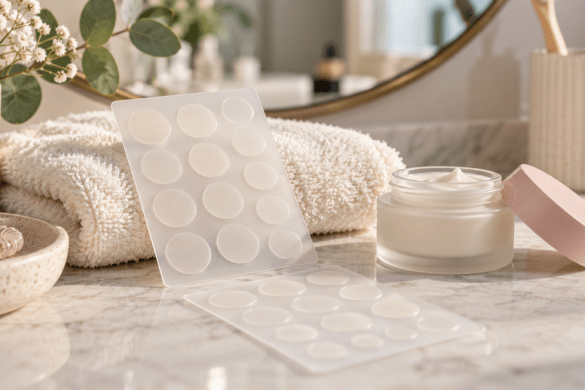
A whitehead that has reached the surface usually has a visible white tip. Hydrocolloid Patches are made for this type of pimple. They contain salicylic acid and tea tree oil, also known as Melaleuca alternifolia leaf oil. The box contains 36 patches.
Cleanse and dry the area, then place the patch directly over the whitehead. It absorbs impurities from a whitehead that has already formed. Leave it on for 6 to 8 hours or overnight, and remove it when you wake up.
With oily skin, keep the application focused on the pimple. If you have several whiteheads, place one patch on each instead of covering the forehead, nose or chin unnecessarily.
If an edge starts to lift soon after application, remove the patch rather than trying to reposition it on damp skin. The brand describes it as hypoallergenic and recommends testing it on a small area before wider use, especially if your skin reacts easily to products applied locally.
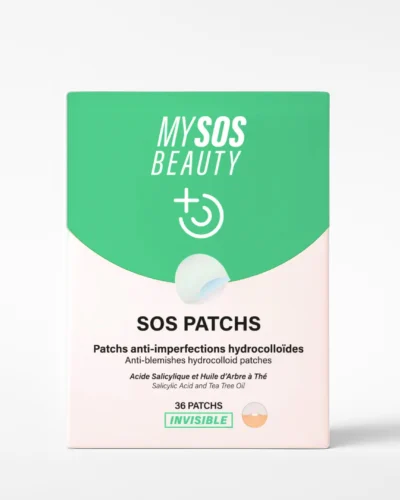
For whiteheads on the surface
- Draws out impurities from the pimple
- Works in 6 to 8 hours
- Leaves no marks
Closed bump beneath the skin: microneedle patches
A closed bump sits beneath the skin and has no visible whitehead at the surface. Hydrocolloid patches are not intended for this type of lesion. Microneedle Patches are designed for subcutaneous pimples.
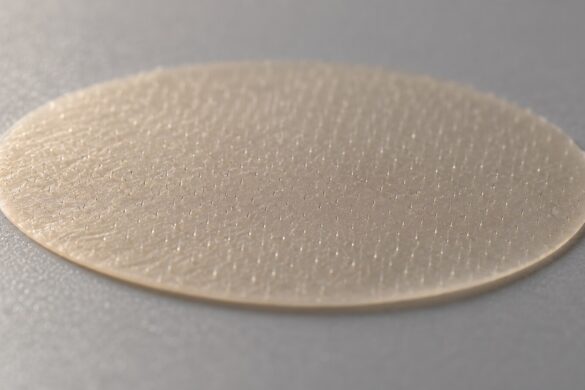
Microneedle Patches contain salicylic acid, niacinamide and Centella asiatica. The box contains 9 patches with 200 microneedles. The recommended application time is 6 to 8 hours.
Apply the patch to clean, dry skin after patting the area and waiting a few moments. Position it over the centre of the closed bump. Even if the surrounding skin is shiny, do not extend the patch across the entire T-zone.
These patches are made for one pimple, not the whole face. They should not be confused with a dermaroller. Find the bump, dry the skin and apply the patch to that spot, then leave it in place for the recommended time.
To organise the rest of your routine without rubbing the pimple, read how to use toner pads without rubbing the pimple.
Should you treat the whole T-zone?
There is no need to cover your forehead, nose and chin with patches just because these areas are shiny. A patch is meant for a pimple. It does not mattify an entire area or replace the step intended for shine without a lesion.
If you have several pimples, look at each one before choosing a patch. Use a hydrocolloid patch for a whitehead at the surface and microneedle patches for closed bumps beneath the skin.
Once the patch is in place, leave the pimple alone. Do not rub it or add another patch simply because the surrounding skin looks shiny. Follow the recommended application time, then remove the patch. To compare salicylic acid with lactic acid, read lactic or salicylic acid according to your skin’s texture.
How should you adapt your routine around the patch?
The area covered by the patch should be clean and dry, without cream, oil or another damp layer that could weaken adhesion. Prepare just this area, then leave the patch on for the recommended time.
If you already use a product containing salicylic acid, check when and where it belongs in your routine before applying the patch. Both references described here contain this ingredient. Follow the intended use of each product.
If the skin around the patch remains shiny, there is no need to enlarge the application area. Remove the patch at the recommended time and check the pimple. If you apply another one, keep it directly over the pimple rather than covering the T-zone.
Key steps to remember
- Cleanse the area around the pimple.
- Pat the skin dry without rubbing.
- Wait a few moments until the skin is dry.
- Keep cream, oil and damp layers away from the skin beneath the patch.
- Place the patch directly over the pimple.
- Choose a hydrocolloid patch for a whitehead that has reached the surface.
- Choose microneedle patches for a closed bump beneath the skin.
- Follow the 6- to 8-hour application time for the appropriate reference.
- Do not cover the entire T-zone.
Practical FAQ
Do you need to dry the whole T-zone?
No. Focus on the area around the pimple. Cleanse it, pat it dry and wait a few moments. You can mattify nearby areas separately, but the patch must sit directly over the pimple on dry skin.
Which patch should you choose for a whitehead?
Choose a hydrocolloid patch when the whitehead has formed at the surface. Apply it to clean, dry skin for 6 to 8 hours or overnight, then remove it when you wake up.
What should you do for a closed bump?
Use microneedle patches designed for subcutaneous pimples. Dry the area, place the patch over the bump and leave it on for the recommended 6 to 8 hours. Keep the application localised and avoid covering the entire T-zone.
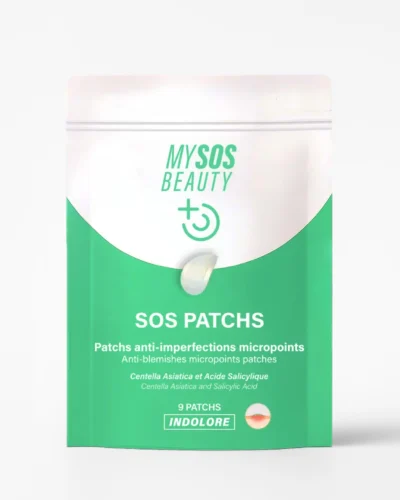
Targets subcutaneous pimples
- Actives delivered to the heart of the pimple
- Works in 6 to 8 hours
- Comfortable to wear
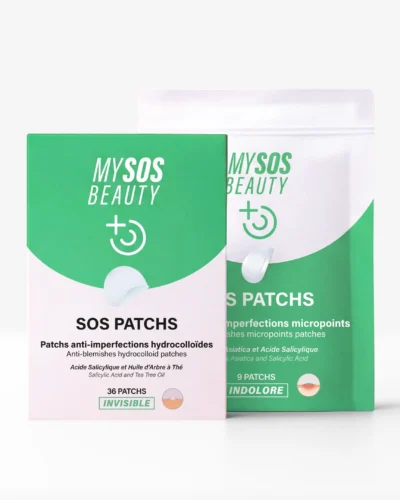 -24%BEST DEAL
Helps reduce the appearance of imperfections
- Soothes redness
- Prevents the appearance of new pimples
- 95.9% natural formula
Comments (0)