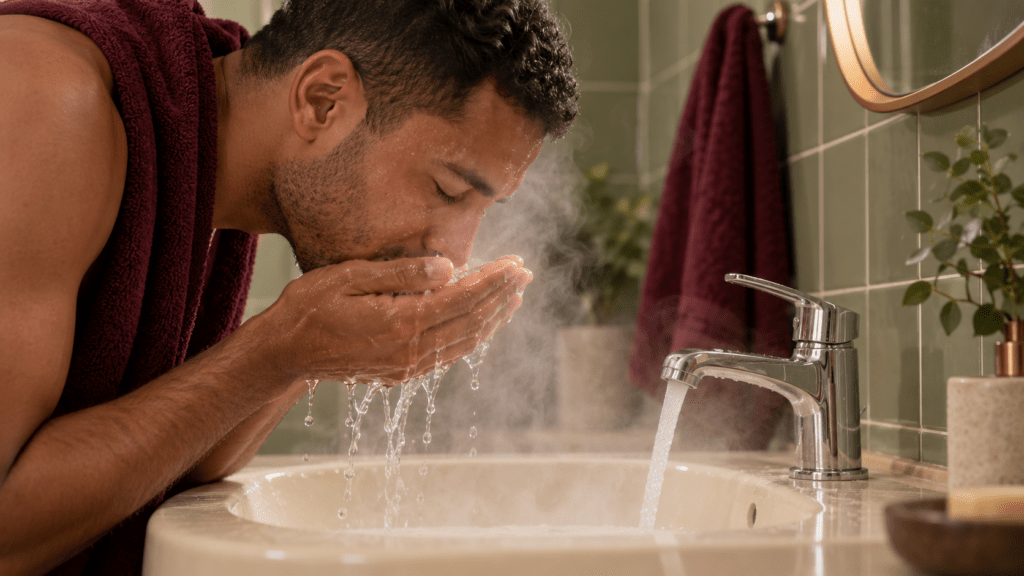
Rinsing your face with hot water feels soothing and seems to leave your skin cleaner, yet it’s one of the most common cleansing mistakes. Heat can disrupt the hydrolipidic film, encourage dehydration and make redness worse.
In this guide, you’ll find out why hot water can be bad for your skin and what it may do over time. You’ll also learn which water temperature to choose when washing your face and which other cleansing mistakes to avoid. Finally, a simple step-by-step routine will help you protect your skin barrier every day.
Why Does Rinsing with Hot Water Feel Tempting — Yet Cause Problems? ⚠️
After a long day, there’s nothing quite like a warm, comforting cleanse. The heat makes it feel as though impurities and makeup simply melt away. But that cosy feeling comes with some little-known side effects:
- Disruption of the hydrolipidic film:
The skin has a natural protective film made up of water and lipids (sebum), which is essential for maintaining its balance and hydration. Hot water excessively dissolves and strips away these vital lipids, weakening your skin barrier. - Deep dehydration:
Without this protective lipid barrier, the water naturally present in the skin evaporates rapidly, leading to a feeling of tightness, redness, and progressive dehydration. - Increased redness and sensitivity:
Heat dilates superficial blood vessels, which intensifies the appearance of redness — particularly on sensitive or reactive skin types (rosacea, couperose).
The Concrete Effects of Repeated Hot Water Cleansing 🚿
Over time, regularly using hot water to cleanse your face can lead to visible consequences that are sometimes difficult to reverse:
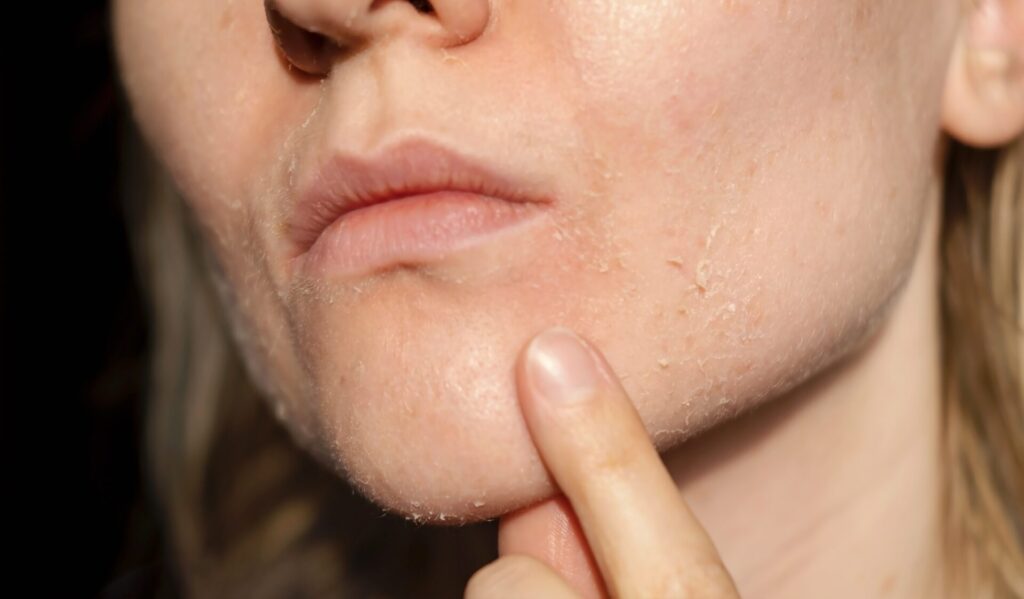
- Dry skin and persistent discomfort:
The face feels constantly tight, the skin loses its elasticity, and even applying moisturising creams seems to provide little relief. - Compensatory overproduction of sebum:
In response to this ongoing aggression, the skin produces more sebum to compensate for the loss of natural lipids — paradoxically increasing the risk of blemishes, blackheads, and breakouts. - Accelerated premature ageing:
Chronic hydration deficiency combined with repeated weakening of the skin barrier can speed up the skin ageing process — leading to fine lines, wrinkles, and loss of firmness. - Worsening of existing skin conditions:
Eczema, atopic dermatitis, inflammatory acne, and rosacea can all be aggravated by repeated thermal stress on the skin.
The Ideal Temperature for Cleansing Your Face: Lukewarm to Cool 💧
To preserve your skin’s health, always opt for a lukewarm or slightly cool rinse:
- Lukewarm water (around 25 to 30°C): ideal for effectively removing impurities without stripping the skin’s natural protective film.
- Cool water (occasionally as a finishing step): can help tighten the appearance of pores, support microcirculation, and quickly restore radiance to your complexion.
Other Common Cleansing Mistakes to Avoid 🧴

Hot water isn’t the only pitfall to watch out for. To complete your routine effectively, be mindful of these other bad habits:
- Scrubbing or exfoliating too vigorously:
Excessive exfoliation or rubbing also damages the skin barrier, leaving skin vulnerable to irritation. - Using overly harsh cleansers (strong surfactants):
Opt for gentle, pH-balanced cleansers (between 4.5 and 5.5) to respect your skin’s natural barrier. - Not drying the skin properly after rinsing:
Leaving skin damp for too long encourages dehydration through evaporation. Gently pat your face dry with a clean towel to avoid any irritation. - Skipping the moisturising step after cleansing:
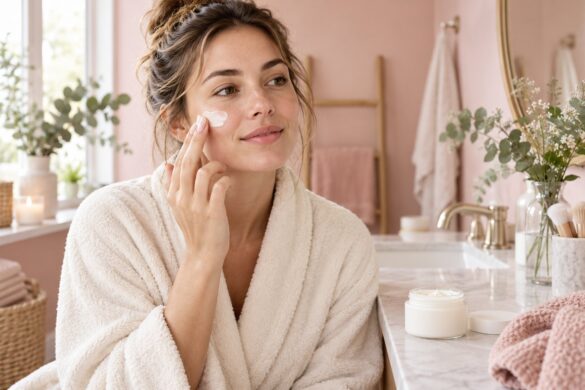
Immediately after cleansing, apply a suitable moisturiser to effectively restore your skin’s hydric and lipid balance.
What Routine Should You Follow for an Ideal Cleanse? 🌿
A well-rounded routine for maintaining healthy skin ideally looks like this:
- Double cleansing in the evening:
- A gentle makeup remover (oil, milk, or balm) to dissolve makeup, SPF, and accumulated impurities.
- Followed by a gentle cleansing gel or foam to purify the skin without stripping it.
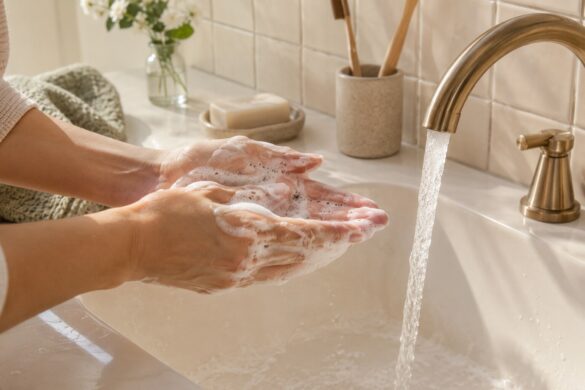
- Rinse with lukewarm water:
To preserve the integrity of the hydrolipidic film while effectively removing any remaining residue. - Hydrating or soothing toner (optional but recommended):
Applied immediately after rinsing, it primes the skin to better absorb the treatments that follow. - A moisturiser suited to your skin type:
To help quickly restore comfort and contribute to protecting your skin barrier after every cleanse.
Frequently asked questions
Lukewarm water, at around 25 to 30°C, is the best choice. It removes impurities without stripping your skin’s natural protective film, so skip very hot water. If you find it pleasant, you can occasionally finish with a splash of slightly cool water.
It can, although not always. Regularly cleansing with hot water strips away the skin’s natural lipids, and the skin may respond by producing more sebum to compensate, which can increase the risk of blemishes, blackheads and breakouts. When rinsing, stick to lukewarm water instead.
Yes, it’s best to avoid hot water. Heat dilates superficial blood vessels, which can make redness more noticeable on sensitive or reactive skin. Repeated exposure to hot water can also aggravate eczema, atopic dermatitis, inflammatory acne and rosacea. Rinse your face with lukewarm water instead.
Pat your skin dry straight away, gently, with a clean towel. If you like, follow with a hydrating or soothing toner to prime your skin for the rest of your routine. Always finish with a moisturiser suited to your skin type to help restore its water and lipid balance.
In Conclusion: Start Building Better Habits Today! ✨
The temperature of your rinse water is far from a minor detail: it can influence the appearance, radiance and comfort of your skin. By skipping hot water, rinsing with lukewarm water instead and getting your cleansing technique right, you can help limit your skin’s exposure to unnecessary stress over time. These everyday habits may contribute to your skin’s comfort and luminous appearance day after day.
If your face still feels tight after switching to lukewarm rinses, check for signs of hard water affecting your skin before buying another moisturiser.
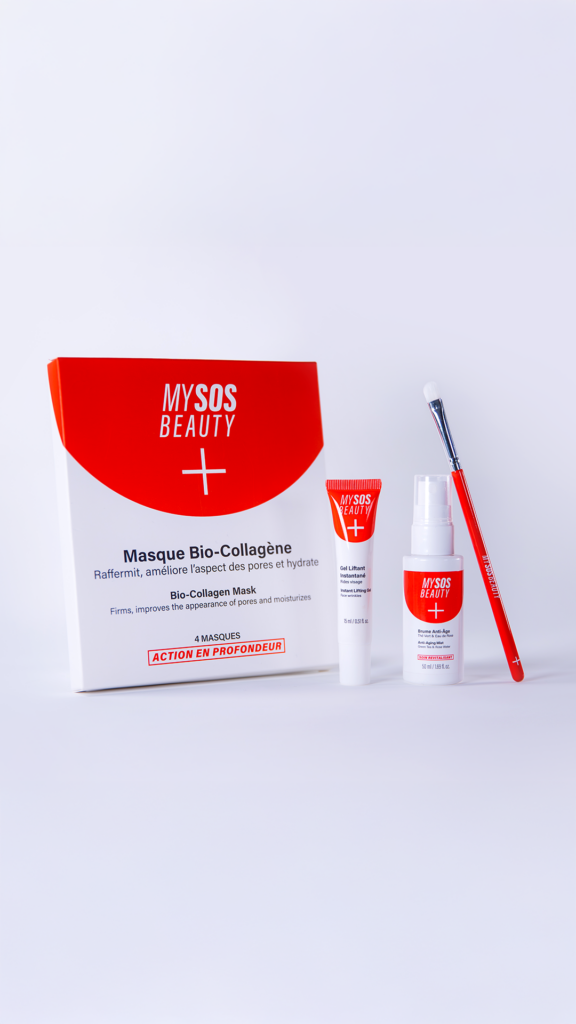
To enhance the benefits of an optimal cleanse, consider pairing it with skincare tailored to your skin’s specific needs. Explore on My SOS Beauty our ranges anti-ageing and anti-blemish specially designed to complement your daily routine effectively.
Here’s to healthy, luminous, and comfortably hydrated skin, every single day!
Related articles
- Why and how to incorporate double cleansing into your daily routine?
- Water retention and blemishes: what’s the link and how to fix it?
- Skincare Routine Mistakes to Avoid