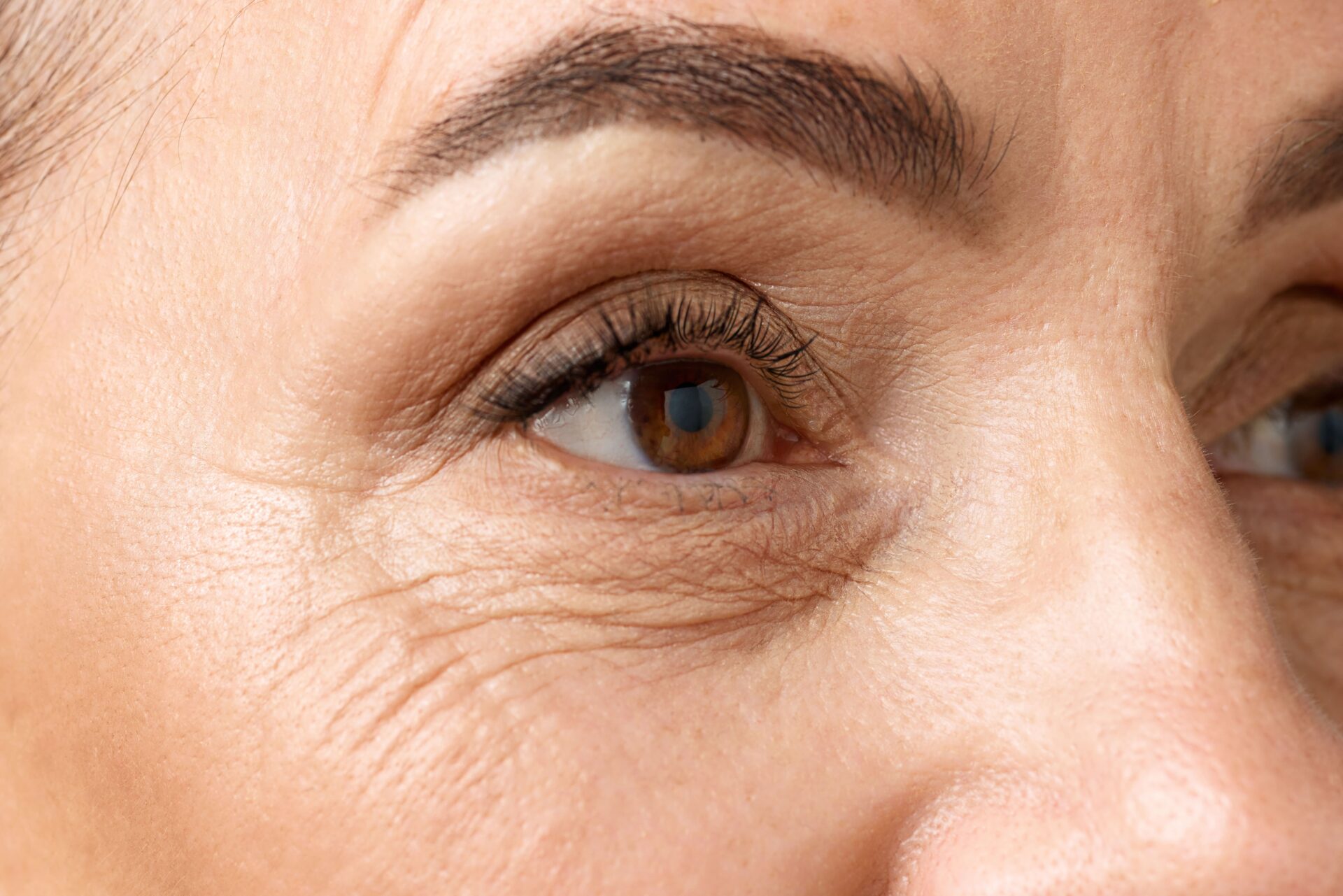
Wrinkles are part of our skin’s natural language. They tell a story of emotions, lifestyles and biological processes. Yet not all wrinkles are the same: some are linked to facial expressions, others reflect temporary dehydration, while others are etched in over time by the ageing process. In this article, we dive into the world of wrinkles to better understand their origins and discover how to minimise them.
What you need to know about wrinkles
Before distinguishing the different types of wrinkles, it’s worth remembering that the skin is made up of several layers (epidermis, dermis, hypodermis), held together by a matrix of collagen and elastin. Wrinkles generally appear when one or more of these layers experience:
- A decline in collagen and elastin production, responsible for firmness and suppleness.
- Skin laxity caused by time or external aggressors.
- Repeated contractions of the facial muscles, leaving their mark on the surface.
- A lack of hydration, accentuating surface creases and fine lines.
1. Expression wrinkles: The face that speaks
What are they?
Expression wrinkles, also known as “dynamic wrinkles”, appear through the repeated movement of facial muscles: squinting, frowning, smiling, laughing… They form primarily in the upper and middle areas of the face, including:
- Frown lines: between the eyebrows
- Crow’s feet: at the corners of the eyes
- Forehead lines: horizontal
Why do they appear?
Every time we animate our face, we engage specific muscles. Over time, as the skin loses its elasticity, it retains the imprint of these contractions. Factors such as stress, sun exposure and pollution can amplify this process.
Can they be prevented or reduced?
- Releasing tension: Facial relaxation techniques (breathing exercises, gentle massage, facial gymnastics) help ease excessive muscle contractions.
- Topical treatments: Creams or serums containing retinol, peptides or collagen help to plump the skin and smooth fine lines.
- Mindful expressions (optional): It’s not about suppressing a smile, but becoming aware of certain habits (such as excessive frowning) to limit their long-term impact.
2. Dehydration wrinkles: Thirsty skin
What are they?
These “surface wrinkles” form when the skin lacks water, displaying fine lines that are often more visible upon waking or in dry environments. They are not necessarily linked to deep ageing and can fade once hydration is restored.
Distinguishing signs
- Fine lines that appear particularly on the cheeks, around the eyes or around the mouth.
- Dull skin and sometimes a feeling of tightness, especially in winter or after a day in the sun.
How to address them?

- Internal hydration: Drink enough water (1.5 to 2 litres per day) and eat water-rich foods (cucumbers, watermelon).
- Hydrating skincare: Choose formulas containing hyaluronic acid, glycerin or ceramides, which help retain moisture in the epidermis.
- Environment: Using a humidifier in overheated or air-conditioned rooms can help maintain optimal humidity levels.
3. Age-related wrinkles: The mark of time
What are they?
Also known as static wrinkles, they appear as the skin naturally loses its elasticity and firmness, particularly due to:
- A reduction in collagen and elastin with age.
- A slowdown in cell renewal.
- Decreased sebum production, making the skin thinner and drier.
Where do they appear?
- Around the lips: Sometimes called “marionette lines” or “lip lines” (above the mouth).
- Facial contour: Laxity becomes visible along the jawline, creating a jowl effect.
- Neck and décolleté: A particularly delicate area that is often overlooked.
Recommended approaches
- Antioxidant skincare (vitamin C, E, polyphenols) to combat oxidative stress and stimulate cell regeneration.
- Collagen stimulation: Retinol, peptides, and certain high-frequency devices or micro-needling treatments support the skin at a deeper level.
- Sun protection: UV rays accelerate ageing; a daily SPF is essential.
A few universal tips to prevent wrinkles

- Eat a balanced diet: Omega-3s, vitamins and antioxidants (colourful fruits and vegetables, nuts) help maintain skin elasticity and fight inflammation.
- Protect your skin from the sun: UV rays are one of the leading causes of skin ageing.
- Avoid smoking: Tobacco weakens collagen fibres and intensifies all types of wrinkles (particularly around the mouth).
- Stay well hydrated: Between water, herbal teas and hydrating skincare, the skin stays suppler and less prone to fine lines.
- Discover our anti-ageing skincare range at My SOS Beauty: A curated selection of products designed to target wrinkles and support skin firmness.
Conclusion ✨
Each type of wrinkle tells its own story: our expressions, our skin’s hydration levels, or simply the passage of time. Rather than fearing them, understanding these mechanisms allows us to adopt both a preventive and corrective approach. Expression wrinkles can be softened by easing tension and strengthening the skin barrier, while dehydration wrinkles fade with proper hydration. Age-related wrinkles can be slowed with a targeted anti-ageing routine (retinol, peptides, firming treatments).
Prevention remains the key: protect your skin from the sun, embrace a healthy lifestyle (hydration, a nourishing diet, stress management) and use targeted products at the first signs of laxity. This will help your skin stay radiant, firm and soft for as long as possible.