
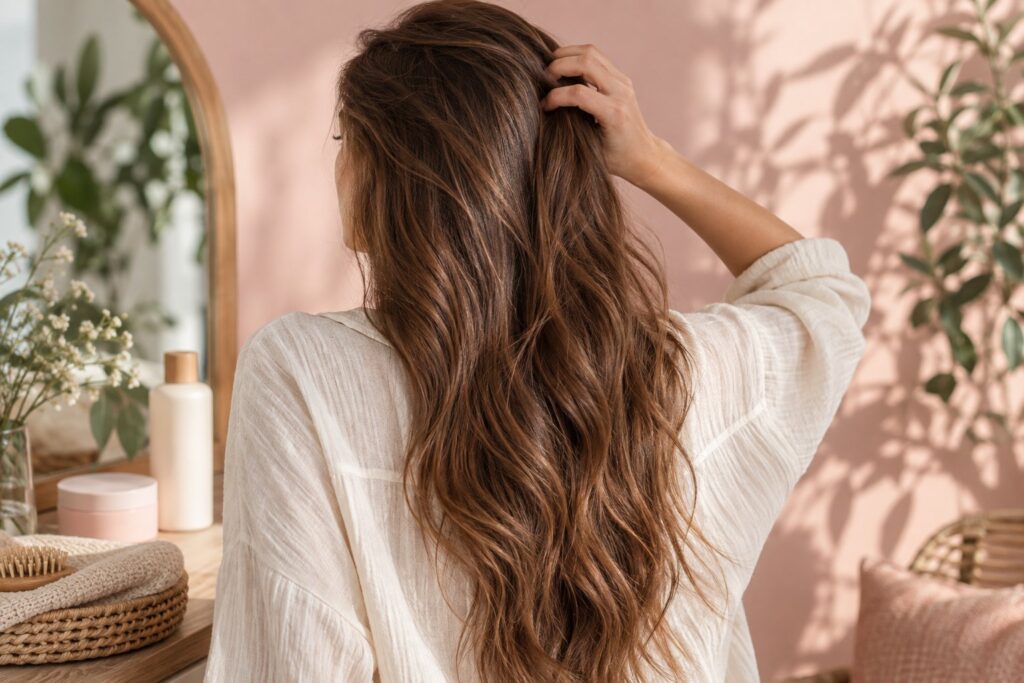
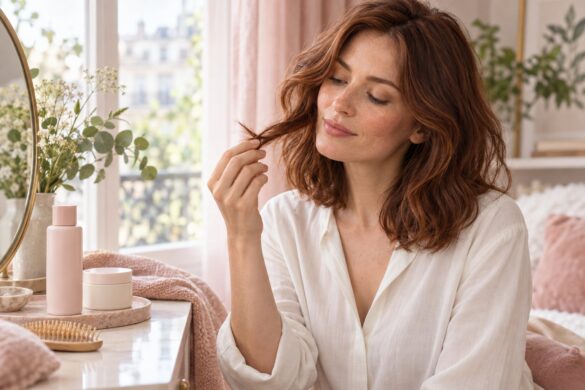
To spot wear, compare the same section of hair near the roots, along the lengths and at the ends. Run your fingers gently along it and notice where it feels rougher or becomes harder to detangle. Keep handling light, especially where the hair snags. If the ends are still difficult to manage despite gentle care, talk to your hairdresser about a trim. You may find that only part of your hair needs a change in routine.
Why the ends often show more wear
The visible hair shaft grows from the follicle, so the section closest to your scalp is newer than the tip. As your hair grows, the existing lengths move further from the root. Those sections do not become new again.
Your ends have been through more washing, drying, brushing and rubbing against clothing. They may also have been coloured, bleached or exposed to heated styling tools. That history adds up: wear can develop over time without a single episode of severe damage.
The cuticle, the hair’s protective outer layer, can gradually become less smooth and even. Hair fibres then have more trouble sliding past one another, which can leave you noticing roughness, snagging or uneven shine. The American Academy of Dermatology notes that styling habits can damage hair and that damaged hair becomes more fragile.
Wear does not always increase neatly from root to tip. Well-preserved ends can still feel supple, and a newer section may have been put through considerable stress. A section’s age gives you some context, but its condition is what you need to check.
Find where your hair shows wear
Feel for changes without pulling
Start with dry, gently detangled hair in soft, diffused light. Choose a section you can reach easily and feel along it with your fingers, without rubbing against the direction of the cuticle. Check the nape and the outer surface too: those sections may have had different exposure.
Pay attention to how the hair feels, whether your fingers catch and what the tips look like. Resist the urge to pull on a strand to test its strength. It puts extra stress on the hair and will not give you a reliable diagnosis.
| Area | What you notice | What to do |
|---|---|---|
| Near the roots | Supple hair with a relatively smooth, even surface | Keep unnecessary handling to a minimum |
| Lengths | An uneven feel, with snagging in places | Watch those patches and reduce repeated exposure |
| Ends | Rough, split or hard-to-detangle tips | Handle gently and discuss a trim if needed |
Think about what each section has been through
If you are growing out bleached hair, the newer section may feel supple until your fingers reach the previously lightened hair. That is where the roughness may begin, even if it does not fit neatly into what you think of as roots, lengths or ends. Our advice on how colouring affects your hair looks more closely at this exposure.
Hair that has never been coloured can have rougher, less even ends too, particularly if you have kept it long and often used heated styling tools. Keeping your natural colour does not keep the hair free from wear.
Make handling gentler where it matters
You do not necessarily need more treatments when you notice wear. Start with the way you brush, dry and style your hair. Where it still feels supple, skip extra passes with a brush or heated tool that do nothing for your hairstyle.
If some sections snag, detangle from the ends and work upwards gradually, without forcing through a knot. After washing, squeeze out water with a towel rather than rubbing. Keep an eye on the areas that already feel uneven so you can reduce the exposure they receive.
For heavily worn sections, more heat is not the answer to a rough texture. Show your hairdresser where the hair starts to feel or behave differently, rather than trying to smooth that patch with repeated passes of a heated tool.
If you are considering an oil, our guide to hair oils by hair type can help you choose without continually adding layers. You can also read about the role of pH in hair care. That concerns the formulation of your products, a separate question from the age of the hair fibre.
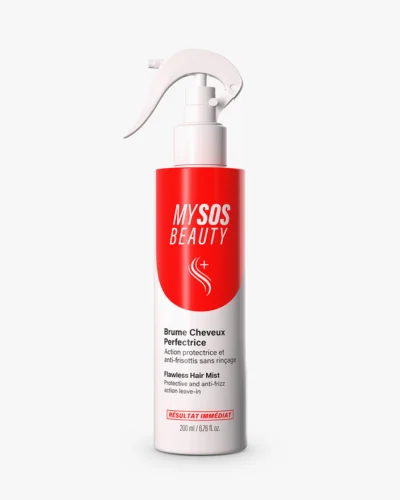
Where does Perfecting Hair Mist fit in?
According to the manufacturer, this mist helps protect against heat, control frizz and shield hair from the effects of humidity. It can help with styling through the lengths, but it cannot make older hair fibres new again.
After washing and towel-drying, spray generously onto damp hair, section by section. Distribute it with your fingers or a detangling brush, then blow-dry with hot air while brushing gently. Heat is essential to activate the product. For the best result, the manufacturer advises using no other styling product before drying. How often you apply it depends on your preferences and hair type.
Frequently asked questions
Do shiny roots mean the lengths are undamaged?
No. Your newer and older sections have been through different things. Check each area rather than relying on the overall shine of your hair.
Are wear and tear and porosity the same thing?
No. Wear and tear describes changes that build up over time. Porosity relates, among other things, to how water moves into and out of the fibre. You cannot determine porosity from a rough feel alone.
When is it worth discussing a trim?
Talk to your hairdresser if the ends remain split, snag badly or make detangling difficult despite gentle handling. Ask them to identify the affected area with you. How much to cut depends on the condition of the hair and the length you want to keep, not a fixed cutting schedule.

Comments (0)