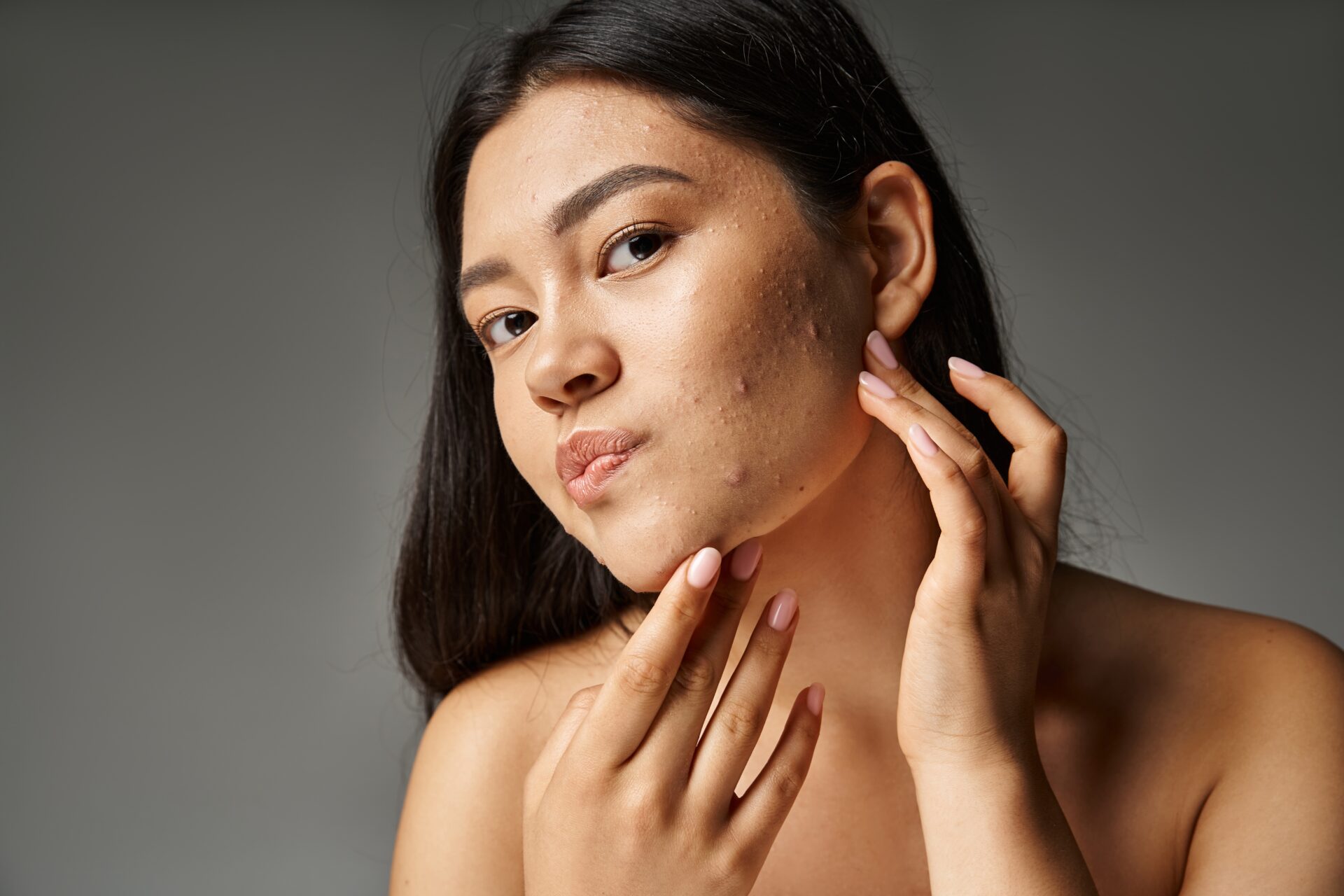
Acne can manifest in many different ways, and each type requires a specific approach to be treated effectively. A one-size-fits-all skincare routine simply doesn’t work for every form of acne. Understanding the nature of your blemishes is essential to choosing the right products and tailoring your routine accordingly. In this article, we’ll explore how to identify different types of acne — comedonal, inflammatory, cystic and hormonal — and how to adapt your skincare routine to target each one.
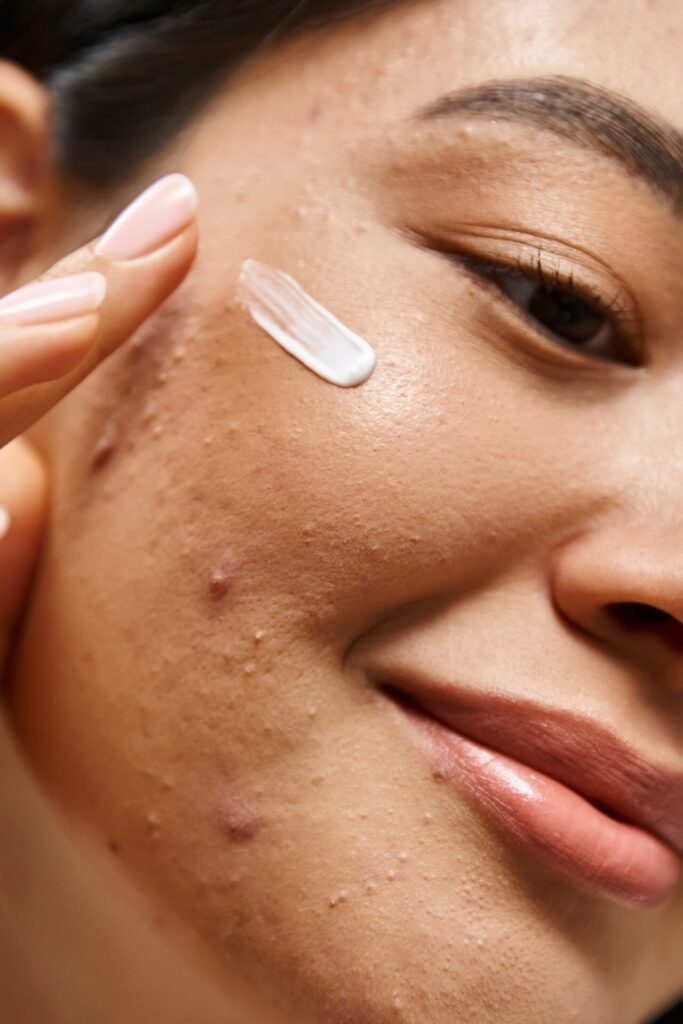
1. Identifying Your Acne Type
Here are the main types of acne and their characteristics to help you identify yours:
- Comedonal acne: This includes blackheads and whiteheads. Blackheads form when sebum and dead skin cells clog the pores and oxidise, while whiteheads are closed, blocked pores.
- Inflammatory acne: Characterised by red, tender spots, it is caused by inflammation triggered by bacteria trapped within the pores.
- Cystic acne: The most severe form of acne, featuring deep, painful cysts beneath the skin’s surface, often linked to hormonal imbalances or genetic factors.
- Hormonal acne: It typically appears on the lower face (chin, jawline) and fluctuates with hormonal cycles. It can present as red spots, cysts or small breakouts.
2. Comedonal Acne: Prioritise Gentle Exfoliation
Blackheads and whiteheads — the hallmarks of comedonal acne — are primarily caused by clogged pores. The goal here is to regulate sebum production and deeply cleanse the pores without irritating the skin.
Recommended routine:
- Cleansing: Use a gentle cleanser containing salicylic acid to deeply cleanse the pores. As a lipid-soluble ingredient, it penetrates the pores and helps remove excess sebum and dead skin cells responsible for blackheads.
- Exfoliation: Incorporate a chemical exfoliant based on salicylic acid 1 to 2 times per week to prevent the build-up of dead skin cells.
- Targeted treatment:Succinic acid can be applied directly to blackheads and whiteheads to gradually reduce them. This ingredient helps keep pores clear while soothing any associated inflammation.
- Moisturising: Use a lightweight, non-comedogenic moisturiser to avoid blocking the pores. Look for products enriched with niacinamide or zinc, which help regulate sebum production and calm the skin.
3. Inflammatory Acne: Reduce Inflammation and Bacteria
Inflammatory acne is characterised by red spots that are often tender and painful to the touch. In this case, your routine should target the inflammation and the bacteria responsible for the infection.
Recommended routine:
- Cleansing: Use a gentle antibacterial cleanser morning and evening. Zinc-based cleansers are an excellent choice for soothing inflammation and regulating sebum production.
- Anti-inflammatory serum: Niacinamide is a soothing ingredient that calms inflammation and helps reduce redness. Apply it morning and evening, after cleansing.
- Targeted treatment:Tea tree oil is a natural solution with antibacterial properties, ideal for treating red spots. Apply it as a targeted treatment directly onto blemishes after moisturising.
- Moisturising: Choose a lightweight, non-comedogenic moisturiser containing zinc or niacinamide to maintain the skin barrier and prevent excess sebum production.
4. Cystic Acne: Opt for Gentle, Targeted Treatments
Cystic acne, the most severe form, often requires dermatological support due to the depth and pain of the cysts. However, a gentle, well-adapted skincare routine can help reduce flare-ups and prevent scarring.
Recommended routine:
- Cleansing: Use a gentle cleanser to avoid further irritating the skin. Sulphate-free formulas designed for sensitive skin are particularly well-suited to avoid aggravating inflammation.
- Targeted treatment: Avoid mechanical exfoliants or overly aggressive treatments, as these risk further disrupting the skin.Succinic acid can be used sparingly to help reduce the size of cysts without irritating the skin.
- Soothing serum: Opt for an anti-inflammatory serum containing zinc and niacinamide to calm the skin. Niacinamide reduces redness and supports faster skin regeneration.
- Moisturising: Choose a gentle, fragrance-free, non-comedogenic moisturiser that reinforces the skin barrier. Products containing zinc are particularly beneficial for cystic-prone skin.
Note: Cystic acne sometimes requires specific medical treatments, such as topical or oral antibiotics. Don’t hesitate to consult a dermatologist if your cysts are recurring or painful.
5. Hormonal Acne: Stabilise the Skin and Adapt Your Routine
Hormonal acne often appears in a cyclical pattern and can be challenging to manage due to hormonal fluctuations. It typically manifests on the lower face and may include red spots, cysts or small breakouts.
Recommended routine:
- Cleansing: Use a gentle cleanser morning and evening to prevent the build-up of sebum and impurities. Opt for a zinc-based cleanser, which helps regulate sebum production and soothe inflammation.
- Balancing serum: Niacinamide and zinc are ideal for stabilising sebum production and reducing redness. Apply a serum morning and evening for a regulating effect.
- Targeted treatment:Tea tree oil can be applied to hormonal spots for its antibacterial properties. For painful cysts, opt for a light, targeted application to avoid aggravating the inflammation.
- Moisturising: Choose a lightweight, non-comedogenic moisturiser that protects the skin barrier and helps prevent irritation. Niacinamide and zinc-based creams offer soothing benefits for hormonal acne.
Additional Tips for a Personalised Anti-Acne Routine
- Hydration: Whatever form your acne takes, keeping your skin hydrated is essential. Opt for non-comedogenic moisturisers enriched with soothing ingredients such as niacinamide and zinc.
- Sun protection: SPF is crucial, especially if you are using treatments such as salicylic acid or tea tree oil, which can increase the skin’s sensitivity to the sun. Choose a lightweight, non-comedogenic sunscreen.
- Patience and consistency: Results can take several weeks, so it’s important to follow your routine regularly. Try introducing one new product at a time to assess how your skin responds.
Conclusion
Tailoring your skincare routine to your acne type allows you to better address your skin’s specific needs and maximise the effectiveness of the products you use. By understanding the characteristics of your acne and incorporating ingredients such as salicylic acid, succinic acid, zinc and tea tree oil, you can take a more targeted approach to the different forms of acne — all while caring for your skin.